
Virtual reality and social skills training with researchers from the University of Aix-Marseille.
Doctoral student in psychology at the Social Psychology Laboratory of the University of Aix-Marseille, I work with Dr Del-Monte, Mrs Fauvarque, and Pr Graziani on virtual reality in the therapeutic context. In this context, I have the pleasure to work for 3 years with C2Care. The plurality and customization of the environments allowed me to have the freedom to direct my research in the desired direction without technological barriers. Virtual reality no longer has to prove its effectiveness in the therapeutic field.
Key takeaways
- Doctoral research at the Social Psychology Laboratory of the University of Aix-Marseille explores virtual reality for social skills training.
- Virtual reality supports role-play exercises that are hard to reproduce in real life or in a therapist's office.
- Difficulty can be adjusted (audience size, attitude of interlocutors) to fit each patient.
- Environments built for glossophobia and school phobia exposure were adapted to stimulate social behaviors toward virtual characters.
- Early results are encouraging for patients' confidence, social sphere and quality of life.
SOCIAL SKILLS TRAINING WITH RESEARCHERS FROM THE UNIVERSITY OF AIX-MARSEILLE
Doctoral student in psychology at the Social Psychology Laboratory of the University of Aix-Marseille, I work with Dr Del-Monte, Mrs Fauvarque, and Pr Graziani on virtual reality in the therapeutic context. In this context, I have the pleasure to work for 3 years with C2Care. The plurality and customization of the environments allowed me to have the freedom to direct my research in the desired direction without technological barriers. Virtual reality no longer has to prove its effectiveness in the therapeutic field.
Whether it is in the treatment of phobias of all kinds, the Cognitive rehabilitation or even relaxation, this constantly evolving tool is a real asset for professionals and researchers. Moreover, the therapy is not always very engaging, but the playfulness and novelty of virtual reality is a significant argument that attracts and motivates patients and participants alike, for the research field.
Generally presented as great supports for exposure therapy, we wanted to divert the environments from their primary purpose by focusing on a less exploited part of psychotherapy: social skills training. And yet … in many psychiatric pathologies, from social anxiety to personality disorders to schizophrenia or autism, the acquisition of social skills is often lacking. These disorders in interpersonal relations generate difficulties in the spheres of private, social and professional life which are added to the other symptoms with which the patient must cope.
The intervention on these spheres is mostly done through role playing in the context of therapeutic groups or simulated situations in the therapist's office. Although these modalities remain interesting, they have the drawback of being too far removed from the situations that patients experience in their daily lives. Unfortunately, it is often complicated, if not impossible, to mobilize external individuals willing to play the role of social interlocutors in role-playing games. This is where virtual reality can be used to its full potential. The plurality of environments, but also their controllability, and their customization are all elements that make it a relevant basis for these role plays. The software offers a variety of relevant situations: school situations, or situations requiring to speak in front of a varied public. This personalization allows us to scale the difficulty (such as the attitude of the interlocutors, the number of people present in an audience) which is extremely interesting for research and for therapeutic practice. We were able to propose exactly the same situation to all our participants and ensure the validity of our results. In a real situation, the uncontrollable variables would have been too numerous to allow us to validate our hypotheses without fearing that they would be more responsible for the results than the variables we chose to implement.
Based on the environments provided for the exposure of patients affected by glossophobia and school phobia, we worked on how to stimulate social behavior in these environments. In other words, we worked on increasing social behaviors towards virtual characters (like the audience) present in the virtual environment. Without revealing too much for the moment, the results are encouraging and offer us interesting perspectives. Being able to stimulate these behaviors in virtual reality would allow patients to feel more confident to implement these behaviors in their daily life, which will improve their social sphere and therefore their social support, and in fact, their quality of life.
Written by Lisa Cerdà, Doctoral student in Psychology, Social Psychology Laboratory of the University of Aix-Marseille
Create a free C2Care account to get more information and try out a scene incorporating artificial intelligence directly online.
C2Care's virtual reality solutions support you step by step toward better well-being.

Author
Lisa Cerda
Related articles
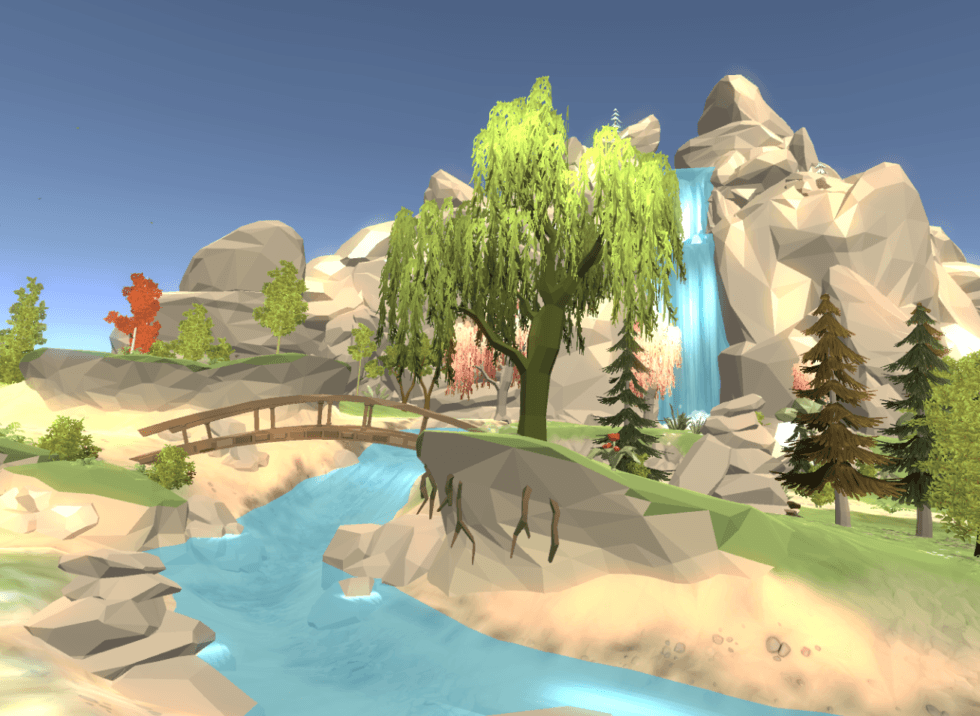
Virtual nature, real well-being
Regular exposure to nature is an integral component of good mental health. The sun, the greenery, the wind, are all elements that contribute to a good psychological balance and a better quality of life. However, certain unforeseen events in life sometimes prevent us from taking full advantage of these benefits. Here we highlight an alternative solution to enable as many people as possible to enjoy nature: virtual nature.
Positive psychology
Even today, many therapies focus mainly on what is wrong. Thus a lot of knowledge has been accumulated about the negative that surrounds people. But little attention has been paid to the strengths of people that allow them to be in a state of well being. To get better, it is also necessary to understand what makes people feel good.
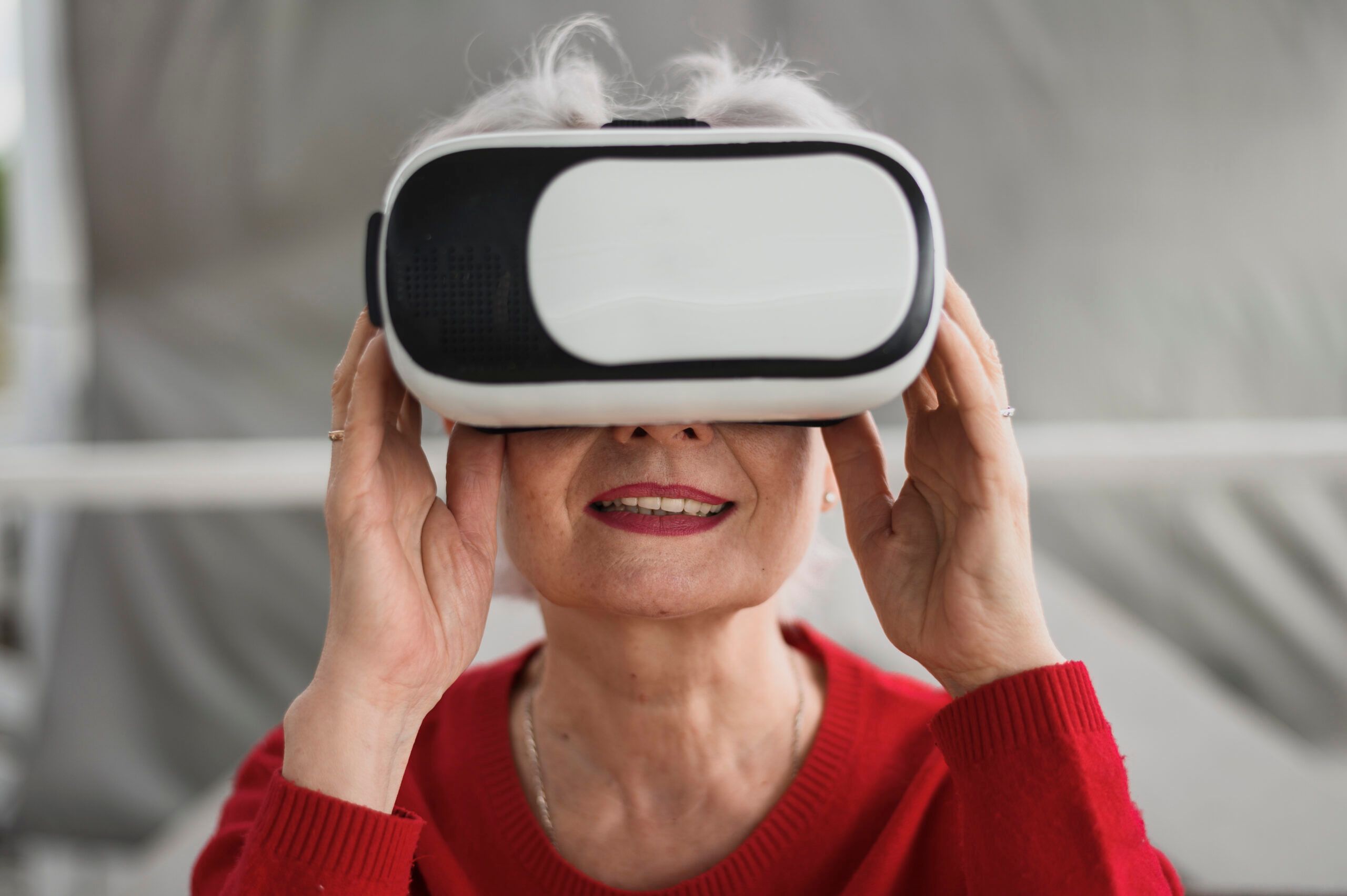
Virtual reality therapy to break the isolation of seniors – Clinical study at the Nice University Hospital
The "Aging Well" project launched in January 2020 by the Nice University Hospital and supported by several sponsors and partners, aims to invent a model for aging well and the future of health care. In this context, the gerontology teams at Nice University Hospital and the company C2Care have set up a clinical study integrating virtual reality, with personalized immersive content.

Formavenir, C2CARE and AP-HP revolutionize caregiver training with virtual reality and are finalists for the Sante Expo 2020 Innovation Awards
The union of 3 experts to give birth to Soignants Ré.V: modules of formation by simulation of the serious game type using the immersive capacity of virtual reality to work on the soft skills of caregivers in the management of pain or aggressiveness of their patients.

Mental health and climate change
You may be wondering what the link is between climate change and mental health? After all, how can one impact the other? The WHO (World Health Organisation) indicates that climate change represents a significant risk to mental health. In addition to impacting our planet, these changes will have an impact on anxiety, depression, violence and post-traumatic stress.

Neurotransmitters : our neural language
Have you ever heard expressions like "having a memory like an elephant"? Or "having the brain of a sparrow"? Because yes, not so long ago it was thought that intelligence and brain size were related. Today, it is no longer a secret; intelligence has nothing to do with the diameter of our forehead or the volume of our brain. We know that, despite its average weight of 1400 grams, the human brain is the most advanced and dynamic in the living world.