
Mental health and climate change
You may be wondering what the link is between climate change and mental health? After all, how can one impact the other?
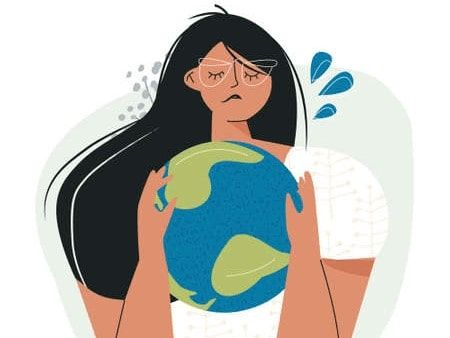
The WHO (World Health Organisation) indicates that climate change represents a significant risk to mental health. In addition to impacting our planet, these changes will have an impact on anxiety, depression, violence and post-traumatic stress.
Key takeaways
- Climate change is a recognised risk to mental health, per the WHO, driving anxiety, depression, violence and post-traumatic stress.
- Eco-anxiety and solastalgia affect people most aware of climate issues, notably young people and climate professionals.
- Extreme heat raises interpersonal conflict risk by 4% and group conflict risk by 14% (Berkeley meta-analysis).
- Air pollution is linked to higher depression, anxiety and psychiatric disorder rates in a 7-year UK study of 13,000 people.
- Virtual reality exposure therapy helps manage climate-related anxiety, PTSD, anger and depression through graduated, guided exposure.
HOW CLIMATE CAN IMPACT OUR MENTAL HEALTH ?
Eco-Anxiety / Solastalgia
The first people affected by this impact are those who have the most knowledge about climate change. Thus, young people or those working in the climate field are particularly impacted.
You may have heard the terms eco-anxiety and solastalgia. Both terms are closely related, even used in the same way. However, we can slightly differentiate them.
Eco-anxiety has been a term used since the 1990s, while the concept of solastalgia emerged around 2003. Eco-anxiety can be defined as a distress related to the projection of climate warming into the future and anxiety related to its evolution and changes.
Similarly to eco-anxiety, solastalgia primarily focuses on the depressive symptoms caused by environmental/climatic changes.
Therapeutic Management:
As mentioned earlier, climate change has a significant impact on anxiety and depression. Thus, therapeutic support may be necessary to help people manage their anxiety-related emotions. Virtual reality can be used to expose patients to situations that cause them anxiety or remind them of climate issues. During these exposures, the therapist provides the patient with tools for emotion management.
Post-Traumatic Stress
Climate-related post-traumatic stress can be direct or anticipatory. Climate change increasingly favors climate disasters (major fires, floods, heatwaves), which can leave traumatic sequelae in people who have directly experienced them.
We can also find anticipation of ecological disaster, which itself can promote the development of post-traumatic stress.
Therapeutic Management:
In the context of post-traumatic stress following various types of climate disasters, virtual reality exposure therapy can immerse the patient in some of these traumatic places. Of course, the exposure is done gradually. As with anxiety management, the therapist will accompany the patient during these exposures to provide emotion management tools and work on catastrophic thoughts. The environments created by virtual reality allow for the closest approximation to real environments to enable optimal exposure and management.
Violence
You may wonder how climate can impact violence? Numerous studies have examined the effect of extreme heat (or cold). A meta-analysis by three researchers from the University of Berkeley demonstrated that higher than normal seasonal temperatures increase the risk of interpersonal conflicts by 4% and the risk of group conflicts by 14%.
You might have noticed that you are more sensitive and less patient when you are too hot or too cold?
Therapeutic Management:
Various therapies can address anger/violence management. In the context of emotion management, virtual reality can expose the patient to relaxation situations. Through environments designed for relaxation, as well as accompanying audio, the therapist will guide the patient in learning to manage their anger.
Depression
Previously, we discussed depression in the context of solastalgia. This time we address depression related to pollution.
Indeed, a British study conducted over more than 7 years with 13,000 people shows a link between air pollution and an increase in depression rates. This same study demonstrates a link between pollutants and increased anxiety and the risk of developing psychiatric disorders such as schizophrenia. The researchers explain that pollutants have significant inflammatory effects that promote psychotic and mood disorders.
Episodes of depression can also develop in connection with rising temperatures. Indeed, we have long known that extreme temperatures are very difficult to cope with psychologically. Many people fear not being able to handle the heat, fear having panic attacks, suffocating… which promotes depression and anxiety in these individuals.
Furthermore, studies show an increased risk and number of suicides linked to rising temperatures.
Therapeutic Management:
Virtual reality also plays a role in managing climate-related depression. Virtual reality can use environments for relaxation/meditation. Thus, patients are immersed in virtual worlds that are ideal for learning relaxation, breathing techniques, letting go… It also allows working on behavioral activation, enabling the patient to re-expose themselves to various enjoyable situations through virtual reality.
A Physical Impact Example: Medications and Heat
What do medications have to do with climate?
Some medications can exacerbate symptoms found in cases of heat, such as dehydration. Indeed, these medications can affect body temperature regulation. As mentioned earlier, higher temperatures impact anxiety, depression, violence…
Thus, with rising temperatures, it will be necessary to adjust prescribed medications accordingly.
Additionally, some medications can deteriorate with heat (such as liquids, suppositories, creams…). Other types of medications, like capsules and powders, can also eventually degrade over time.
THERAPEUTIC MANAGEMENT
Here are some examples of the impact of climate on individuals' mental health. As you may have understood, the consequences related to climate necessitate new therapeutic management. More and more people need a moment of listening and exchange about their worries and emotions… It is therefore important to support individuals to help them manage and feel better in their daily lives!
The AI revolution !
Try our artificial intelligence for free and discover how it can support you in your daily life.

Frequently Asked Questions about Climate Change, Mental Health and Virtual Reality
What is eco-anxiety?
Eco-anxiety is distress linked to projecting climate warming into the future, along with anxiety about its evolution and consequences. The term has been used since the 1990s and mainly affects young people and those with strong knowledge of climate issues.
What is the difference between eco-anxiety and solastalgia?
Both describe distress caused by climate change, but solastalgia, which emerged around 2003, focuses on depressive symptoms triggered by environmental changes. Eco-anxiety centers on anxiety about future warming, while solastalgia reflects the impact of changes already underway.
Can virtual reality help manage eco-anxiety?
Yes. Virtual reality can expose patients to situations that trigger anxiety or evoke climate issues, allowing the therapist to work on emotion management. This gradual exposure helps patients develop tools to cope with climate-related distress in a controlled environment.
What is climate-related post-traumatic stress?
It can be direct, following a climate disaster such as fires, floods or heatwaves, or anticipatory, arising from fear of future ecological disasters. Both forms can leave traumatic sequelae and increase the risk of developing post-traumatic stress.
Can climate change increase violence?
Higher than normal seasonal temperatures raise the risk of interpersonal conflicts by 4% and group conflicts by 14%, according to a meta-analysis from the University of Berkeley. Extreme heat or cold can also make people more sensitive and less patient.
Is there a link between air pollution and depression?
A British study following 13,000 people over more than 7 years found a link between air pollution and increased depression rates. The same research links pollutants to higher anxiety and a greater risk of psychiatric disorders such as schizophrenia.
Why should medication be adjusted during heatwaves?
Some medications can worsen heat-related symptoms such as dehydration by affecting body temperature regulation. As temperatures rise, prescriptions may need adjusting, and certain forms like liquids, suppositories or creams can also deteriorate in the heat.
What role does the assistant IA Camille play?
The assistant IA Camille offers support as a trusted companion, allowing patients to share their concerns without fear of judgment. Virtual characters within the scenes also replicate real-life social behaviours across everyday contexts such as a party or a job interview.
Author
C2Care
Related articles

Fear of Insects: A Widespread Phobia
The extreme fear of insects is called entomophobia and is one of the most common forms of phobia. It causes panic and acute anxiety in its victims, but there are effective ways to get rid of it, such as virtual reality, medication, etc. Psychologists offer virtual reality therapy to help clients overcome this fear by engaging in risky situations in a safe, virtual setting. These specialists use control parameters to adjust the computer-generated environment. The complex virtual environments involve replicating aspects of the real world through 360-degree views, 3D graphics and sound. Children and adults can develop entomophobia, especially when they have had hostile experiences with a particular insect. With approximately 6% of the population suffering from entomophobia, C2Care provides its clients with psychological and medical treatment for various fears, eating disorders, addiction-related stress, and implements virtual reality exposure therapy into their program. Keep reading to understand how virtual reality can help eradicate the fear of bugs.

Dissociative identity disorder
Perhaps you've already heard of DID: Dissociative Identity Disorder. We're hearing more and more about it in the media, and we can even find it in certain films (e.g. Split). As a result, both true and false information about this pathology is circulating. Let's take a look at TDI together!

Post-traumatic stress
We hear a lot about post-traumatic stress, but what is it really? Can one suffer from post-traumatic stress even though one has not really experienced a traumatic event?

Behavioral activation
Faced with depression and its negative symptoms, behavioral activation is today a first-line treatment whose effects continue to be highlighted in the scientific literature. Theorized in the 1950s, developed in the 1970s and popularized in the 1990s, behavioral activation shows equivalent effects to antidepressants and cognitive therapy, while simplifying the patient's therapeutic path. Spotlight on this technique still too little known.
Depression in the elderly
Recent years have seen a huge uptick in the use of VR in geriatrics. As Mathias et al reported in a 2019 review of the literature, VR has become an effective tool in screening for and treating cognitive impairment, while it has also found uses in the treatment of Alzheimer's Disease. The use of VR in treating mood disorders and other forms of depression in the elderly has lagged behind, but there are reasons to believe that it will be the next frontier in treating mental health disorders among American seniors. VR has been used with great success in treating ADHD, anxiety, and depression among teens and younger people, leading many geriatrics specialists to see exciting potential for older age groups. So let's look in more detail about how the technology could be applied, and the kind of benefits seniors can anticipate.

Procrastination
Procrastination is a well-known phenomenon that affects most of us. It is the tendency to put off tasks that need to be done.