
Vicarious learning
What if completing a task did not depend solely on you? What if your personality was governed by fundamental psychological needs and that meeting these needs could lead you to personal fulfillment? To be self-determined is to be able to respond to a sense of freedom, interest, appreciation and acceptance at the same time. Being self-determined is therefore fundamental to our well-being.
Key takeaways
- Vicarious learning is the imitation of behaviors observed in others' actions.
- Also called modeling, it involves attention, retention, reproduction and motivation, not passive mimicry.
- It stems from Albert Bandura's social learning theory (1986), combining cognition, behavior and environment.
- In education, it helps acquire new behaviors, eliminate dysfunctional ones and reduce anxiety or phobias.
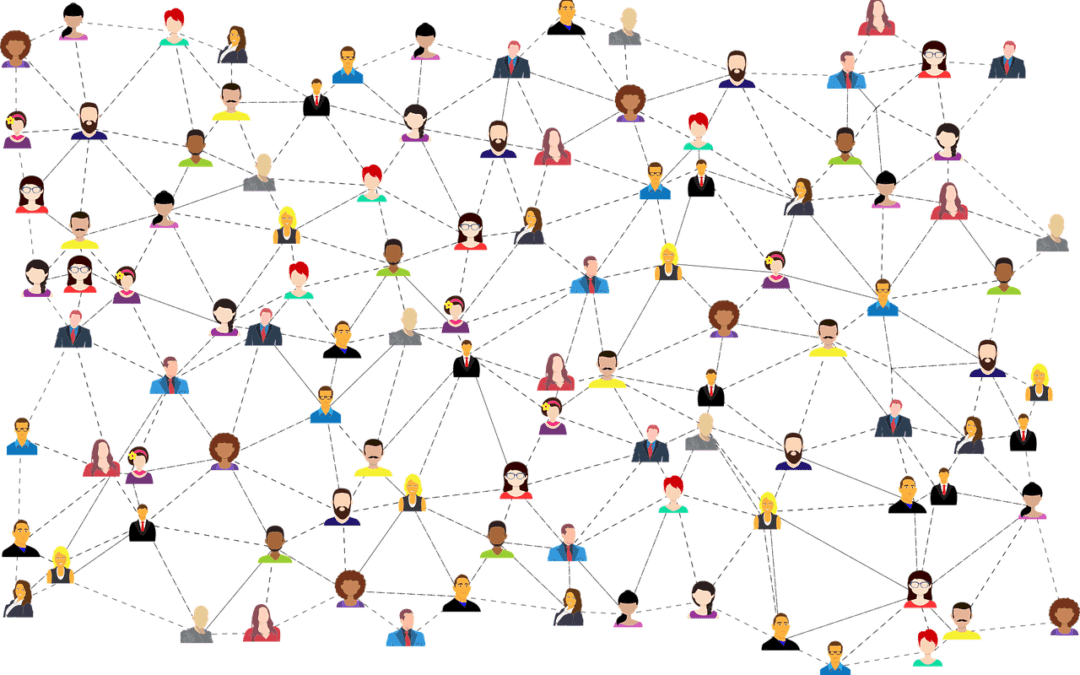
- Influences extend beyond family to culture, media, teachers and public figures.
WHAT IS VICARIOUS LEARNING ?
Vicarious learning is the imitation of behavior following the observation of our peers' actions.
We consider the outcomes of certain actions performed by others and see their success through the behaviors demonstrated. These behaviors, therefore, appear necessary to imitate, either consciously or unconsciously, because they provide results that align with our expectations or values (such as leadership, for example). In this way, we avoid accumulating trial and error that others might have experienced before us.
WHAT IS THE DEFINITION OF VICARIOUS LEARNING ?
Vicarious learning, also known as "modeling," involves imitating behaviors observed in individuals we consider role models in a particular field.
Unlike mimicry, observation in vicarious learning is not passive. It actively involves several dimensions: attention, retention, reproduction, and motivation.
In this type of learning, the observed behaviors have proven successful, and we aim to apply the same behaviors to achieve similar successes.
WHICH THEORETICAL FRAMEWORK ?
Vicarious learning emerged from social learning theories in 1986, developed by Albert Bandura. With a cognitive-behavioral orientation, Bandura realized that we cannot exist without considering our surroundings, such as our family, culture, etc. We always live with these influences and, whether we want to or not, we learn from them.
Social learning theories thus consider human actions as resulting from three factors: cognitions, behaviors, and environmental context.
WHAT ROLE DOES OUR OWN EXPERIENCE PLAY ?
Just because we learn through imitation doesn't mean our own experiences should be disregarded in this type of learning. Indeed, based on our personal experiences, we continually adjust our behaviors according to what we have lived through. Some experiences may have been failures, leading us to analyze the successful experiences of others in areas where we struggle.
This is what we consider the symbolization of our experience. In this way, we learn to communicate better, anticipate potential difficulties more effectively, and better envision our future and our actions. Vicarious learning, therefore, is not mere mimicry as it ultimately involves interpreting the results of others' behaviors through our own lens.
The AI revolution !
Try our artificial intelligence for free and discover how it can support you in your daily life.
VICARIOUS LEARNING IN EDUCATION
We experience vicarious learning from birth, imitating the behaviors and actions of our parents. This type of learning provides multiple benefits to children, adolescents, and adults.
Firstly, it allows individuals to apprehend new behaviors they have not yet acquired. By observing, practicing, and personalizing these behaviors, they can integrate them into their own repertoire.
Secondly, vicarious learning helps in eliminating dysfunctional behaviors. If an individual observes that a more appropriate reaction to a situation leads to greater well-being, they will strive to adopt that reaction.
Lastly, this type of learning can reduce anxiety or phobias. By observing loved ones facing anxiety-inducing situations with calm and appropriate responses, individuals can imitate these behaviors, thus reducing their own anxiety.
LEARNING HAPPENS ALL AROUND US
Vicarious learning extends far beyond imitating family members' behaviors. It encompasses influences from our culture (peers sharing values, ideologies, religions), books, media (TV shows, radio), influential figures (presidents, Nobel Prize winners), friends, and institutions (teachers, educators).
School is a significant source of vicarious learning. Teachers share their experiences, demonstrate exercises, and successful methods, which students can then apply to achieve similar success.
Imitation of behavior can occur in any context. The closer an individual is to their source of influence, the more readily the behavior is adopted. However, even without personal acquaintance, an individual can still consider a distant model.
Therefore, as with any type of learning, vicarious learning can be toxic depending on the sources of inspiration. Malicious individuals can exploit the vulnerability of others, leading them to adopt behaviors perceived as successful but potentially harmful.
Driver USING THIS LEARNING AS A DRIVER
Now that you are fully aware that others' behaviors influence you, leverage this understanding. Observe the behaviors of people you consider successful, analyze and interpret their success. Reflect on what might suit you and what you can implement to achieve your goals. This isn't about "copying" your peers or losing your identity to become them. It's about appropriating behaviors that could be useful to you and incorporating them according to your own personality and experience.
Frequently asked questions about vicarious learning and virtual reality
What is vicarious learning?
Vicarious learning refers to the imitation of a behaviour after observing the actions of others. It is based on four active dimensions: attention, retention, reproduction and motivation. It therefore differs from simple mimicry because it involves a personal interpretation of the observed behaviour.
Who developed the theory of vicarious learning?
This concept stems from the social learning theories developed by Albert Bandura in 1986. Rooted in a cognitive behavioural approach, the theory considers that our actions result from the interaction of three factors: cognition, behaviour and environmental context.
Can vicarious learning reduce anxiety?
Yes. By observing people close to them respond calmly to anxiety-provoking situations, individuals may imitate these appropriate reactions. This mechanism can help reduce their own anxiety or phobic responses in similar situations.
Why use virtual reality in mental health?
Virtual reality enables gradual and controlled exposure to anxiety-provoking situations in a safe environment. It provides immersive, reproducible environments that can be personalized to the patient and can strengthen engagement in the treatment of anxiety disorders, addictions and mood disorders.
Can I feel nauseous when using a virtual reality headset?
Yes, this can happen. This phenomenon is known as cybersickness and affects part of the population. It is reversible. To help users adapt, it is recommended to begin with static environments before gradually moving on to more dynamic movements.
Which patients can benefit from virtual reality exposure therapy?
Research suggests that virtual reality exposure therapy can be effective across a broad range of age groups, from adults to older adults. In adolescents, virtual reality can be particularly useful for increasing therapeutic engagement. It is generally not recommended for people with epilepsy or during pregnancy.
What are the benefits of virtual reality for practitioners?
Virtual reality allows practitioners to differentiate their approach from more traditional therapeutic methods. It is supported by a growing body of scientific research, can improve patient engagement and provides direct access to a variety of exposure environments without requiring external logistics.
How is artificial intelligence used in virtual reality scenarios?
C2Care uses artificial intelligence through the AI assistant Camille, who supports the patient without judgment, as well as through virtual characters that reproduce realistic social behaviours. Patients can interact with them in everyday situations such as a party or a job interview.
Author
C2Care
Related articles
Positive psychology
Even today, many therapies focus mainly on what is wrong. Thus a lot of knowledge has been accumulated about the negative that surrounds people. But little attention has been paid to the strengths of people that allow them to be in a state of well being. To get better, it is also necessary to understand what makes people feel good.
National Hypersensitivity Day
This day is an opportunity to revalue hypersensitivity. Launched by Saverio Tomasella, it allows to better inform the leaders on the characteristics and modalities of hypersensitivity. They represent a quarter of the population and are estimated to number nearly 10 million in France. It is therefore necessary to take into account the specific problems of hypersensitive people and their place in society.
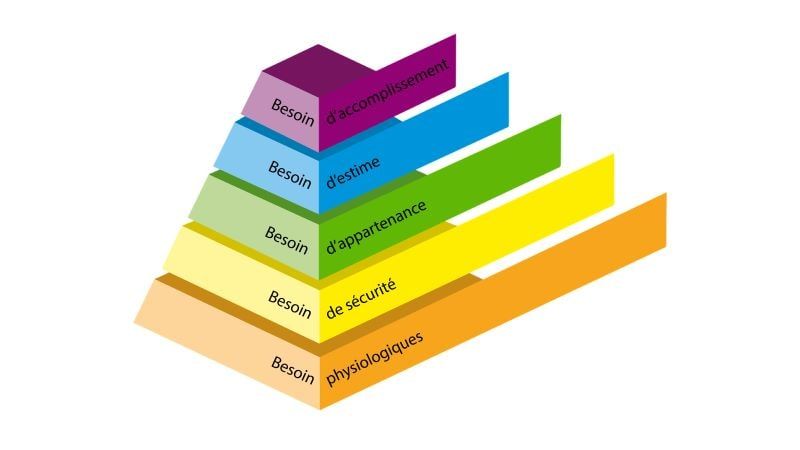
Maslow's hierarchy of needs
What if your own fulfillment was not only dependent on you but on the basic needs present for each human being? What if understanding your needs would allow you to approach more easily a feeling of well-being?
Understanding CBT: An Effective and Practical Approach to Feeling Better
Cognitive Behavioral Therapy, or CBT, is one of the most widely used and scientifically validated forms of psychotherapy today. Recommended by many health authorities, it is aimed at people who want to better understand their psychological difficulties and learn how to overcome them in a practical way.
Neurotransmitters : our neural language
Have you ever heard expressions like "having a memory like an elephant"? Or "having the brain of a sparrow"? Because yes, not so long ago it was thought that intelligence and brain size were related. Today, it is no longer a secret; intelligence has nothing to do with the diameter of our forehead or the volume of our brain. We know that, despite its average weight of 1400 grams, the human brain is the most advanced and dynamic in the living world.
My child is afraid to go back to school
Parents and guardians currently considering choices when it comes to reopening schools during the height of a deadly epidemic may have an additional challenge: children who are afraid to return to the classroom. Feelings of restlessness are common and anticipated in times of change or transition. This is especially true for children and adolescents returning to school or for children entering kindergarten for the first time. This transition can be painful and challenging for the whole family! Before the first day of school, the nervous child may cry, cling, complain of stomachaches or headaches, be grumpy, become moody or irritable, and become withdrawn. Whenever children attend VR therapy, they first learn coping skills that help them stay calm in stressful situations. Once they are satisfied with these approaches, they move on to virtual reality therapy. They view computer-generated environments and use avatars to experience relationships with other youth and adults.