
The Theory of Constructed Emotion
Many models attempt to explain the functioning and development of emotions. This recent model offers a new perspective on emotional skills and the cultural variations of them.

Key takeaways
- Emotions are not innate but dynamically constructed through cognitive, social, and physiological processes.
- Lisa Feldman Barrett's theory challenges the view of emotions as discrete, universal responses.
- Emotions arise from a cognitive evaluation of stimuli based on beliefs, attention, memory, and judgment.
- Social context, cultural norms, physical environment, and personal background all shape how emotions are constructed.
- This has implications for clinical practice by examining the thought patterns underlying emotional disorders.
WHAT IS THE THEORY OF CONSTRUCTED EMOTION ?
Constructed emotion theory is a relatively new perspective in the field of the psychology of emotion that suggests that emotions are not static, universal entities, but rather dynamic mental constructs that result from the complex interplay between different cognitive, social, and physiological factors. According to this theory, emotions are not innate or biologically determined, but rather created and regulated by individuals themselves through a construction process that involves the attribution of meanings to specific events or sensory experiences.
A bit of history
The theoretical underpinnings of constructed emotion theory can be traced back to the early 1990s, when Lisa Feldman Barrett and her colleagues began to challenge traditional assumptions in emotion psychology that emotions are discrete, universal entities that are triggered by specific stimuli. Instead, Barrett proposed that emotions are constructs that emerge from the interaction between complex cognitive, social, and physiological processes, all of which are influenced by culture, life experiences, and social contexts.
Constructed emotion theory suggests that emotions are not determined by specific physiological response patterns, such as heart acceleration or sweating, but rather by thought patterns that interpret these responses as meaningful in a given context. For example, heart acceleration may be interpreted as being related to fear in some situations, but as being related to arousal in other situations.
WHAT DOES THE THEORY OF CONSTRUCTED EMOTION PROPOSE ?
According to this theory, emotions are not innate, but rather constructed by individuals through a complex process of emotional regulation that involves the attribution of meanings to specific stimuli or experiences. This process involves a cognitive evaluation of stimuli, which consists of interpreting them according to the individual's prior knowledge, beliefs, and expectations. For example, a person with negative self-beliefs may interpret constructive criticism as a personal attack, which may trigger negative emotions such as anger or sadness.
In addition, constructed emotion theory suggests that emotions are regulated by cognitive processes such as attention, memory, and judgment.
For example, a person may regulate emotions by focusing on positive aspects of a situation rather than negative ones, or by recalling positive experiences to reinforce a positive emotional state.
Constructed emotion theory emphasizes that emotions are not only individual constructs, but are also influenced by the social contexts in which they occur. For example, cultural norms and social expectations can affect how people interpret and express their emotions. In some cultures, open expression of anger may be considered inappropriate, whereas in other cultures it may be considered an acceptable form of emotional expression.
Similarly, social roles and interpersonal relationships can influence the construction and regulation of emotions. For example, a person may regulate their emotions differently depending on their social status or relationship with another person. Emotions can also be used to maintain or change interpersonal relationships, such as when a person uses flattery to improve their relationship with another person.
WHAT DOES THIS THEORY CONTRIBUTE TO OUR UNDERSTANDING OF EMOTIONS ?
Constructed emotion theory suggests that physical contexts can also influence the construction and regulation of emotions. For example, temperature, lighting, and noise can all affect people's emotional states. Studies have shown that people may feel more anxious in noisy and cluttered environments, while calm and peaceful environments may induce more relaxed and positive emotional states.
Another important feature of the constructed emotion theory is that it recognizes that emotions are not automatic responses to stimuli, but rather are constructed through a construction process that may involve significant individual variation. According to this theory, individuals may have differences in how they construct and regulate their emotions based on their background, personality, and social environment.
For example, some people may be more prone to anxiety because of their life history or temperament, while others may be more resilient to stressful events because of their ability to regulate their emotions effectively.
Finally, constructed emotion theory has important implications for clinical practice, as it suggests that emotional disorders can be better understood and treated by examining the cognitive and social processes underlying their construction and regulation. Clinical interventions can therefore be designed to help patients identify and change the thought patterns and behaviors that contribute to the construction and regulation of their emotions.
In sum, the theory of constructed emotion represents an important advance in understanding emotions as dynamic, socially constructed processes rather than static, universal entities. This theory offers a rich and nuanced perspective on the nature of emotions, which can help to better understand their role in everyday life and their relevance to mental health.
TO SUMMARIZE
According to the theory of constructed emotion, emotions are not innate, but rather constructed by individuals through a complex process of emotional regulation that involves the attribution of meanings to specific stimuli or experiences. This process involves a cognitive evaluation of stimuli, which consists of interpreting them according to :
Beliefs, knowledge and expectations
For example, a person with negative self-beliefs may interpret constructive criticism as a personal attack, which may trigger negative emotions such as anger or sadness.
Attention, memory and judgment
A person can regulate emotions by focusing on positive aspects of a situation rather than negative ones, or by recalling positive experiences to reinforce a positive emotional state.
Social context (cultural norms and social expectations)
In some cultures, open expression of anger may be considered inappropriate, while in other cultures it may be considered an acceptable form of emotional expression.
Social roles, interpersonal relationships
For example, when a person uses flattery to improve their relationship with another person.
Physical contexts (weather, lighting, noise)
People may feel more anxious in noisy and cluttered environments, while calm and peaceful environments may induce more relaxed and positive emotional states.
Background and personality
For example, some people may be more prone to anxiety because of their life history or temperament, while others may be more resistant to stressful events because of their ability to regulate their emotions effectively.
The AI revolution !
Try our artificial intelligence for free and discover how it can support you in your daily life.

Frequently Asked Questions about the Theory of Constructed Emotion and Virtual Reality
Why use virtual reality in the field of mental health?
Virtual reality offers gradual and controlled exposure, letting patients confront anxiety-inducing situations in a secure environment. It provides realistic, reproducible environments, increases patient engagement, and allows personalized treatment tailored to each patient. It is used for anxiety disorders, addictions, mood disorders, and cognitive remediation.
Can I feel nauseous while using the headset?
This can happen; it is called cybersickness, a well-known phenomenon affecting part of the population. It is reversible. To adapt, start with static environments such as relaxation scenes, then introduce slight head movements before progressing to slower movements.
What are the benefits for therapists using virtual reality?
Integrating virtual reality lets therapists differentiate their practice from traditional treatment options. It is supported by extensive research, reinforcing its credibility, and its interactive nature improves patient engagement. It also saves time by giving direct access to various exposure environments without external logistics.
Who should I contact in case of software issues?
Our technical support team can be reached via live chat from your control panel. If you encounter an issue with your headset, we will help diagnose the problem and offer a solution, providing a return label and replacing defective equipment within 48 hours if needed.
Which patients can benefit from virtual reality exposure therapy?
Virtual reality benefits a wide age range. Studies show strong results in adults for anxiety disorders, autism, addictions, eating disorders, and mood disorders. Adolescents show increased therapeutic engagement, while elderly patients benefit from cognitive stimulation and anxiety reduction. It is not recommended for people with epilepsy or pregnant individuals.
What pathologies can be treated in virtual reality?
Virtual reality treats anxiety disorders such as phobias, post-traumatic stress disorder, and obsessive-compulsive disorders. It also supports the treatment of addictions, mood disorders, eating disorders, autism spectrum conditions, neuropsychological disorders, psychotic disorders, and cognitive remediation for various patient profiles.
Author
C2Care
Related articles

Dissociative identity disorder
Perhaps you've already heard of DID: Dissociative Identity Disorder. We're hearing more and more about it in the media, and we can even find it in certain films (e.g. Split). As a result, both true and false information about this pathology is circulating. Let's take a look at TDI together!
Cognitive distortions
Every day we have to understand the reality that surrounds us. All our psychological processes are activated in different situations: decision making, emotions, understanding, evaluation. But these processes can be erroneous and limited by cognitive distortions.

The TIPI method
Anxiety, sadness and anger are negative emotions that can be difficult to manage and that can impact personal and professional life. There are simple and quick methods that help accept and deal with these emotions so that they no longer weigh on daily life. Among them, the TIPI method.
Positive psychology
Even today, many therapies focus mainly on what is wrong. Thus a lot of knowledge has been accumulated about the negative that surrounds people. But little attention has been paid to the strengths of people that allow them to be in a state of well being. To get better, it is also necessary to understand what makes people feel good.
Maslow's hierarchy of needs
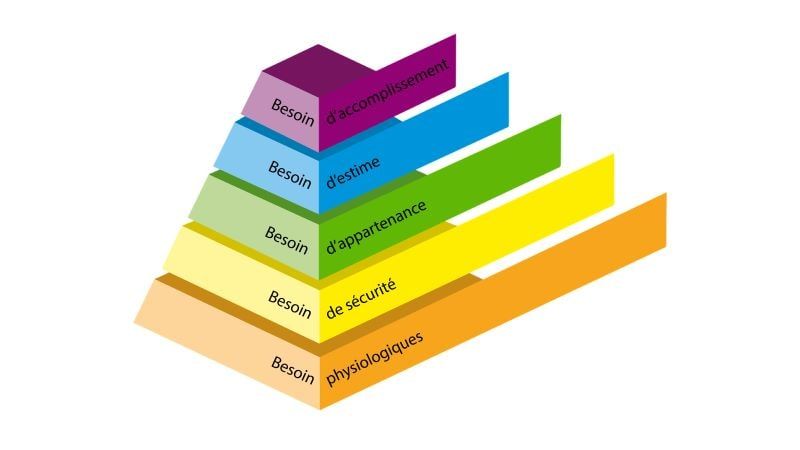
What if your own fulfillment was not only dependent on you but on the basic needs present for each human being? What if understanding your needs would allow you to approach more easily a feeling of well-being?

Mental health and climate change
You may be wondering what the link is between climate change and mental health? After all, how can one impact the other? The WHO (World Health Organisation) indicates that climate change represents a significant risk to mental health. In addition to impacting our planet, these changes will have an impact on anxiety, depression, violence and post-traumatic stress.