
The saviour syndrome
Among us there are saviours. These are people who are very, even too, empathetic, who want to help everyone in any situation. They are people who will give everything for others, even if it means forgetting themselves. We call this the saviour syndrome.

Key takeaways
- Saviour syndrome is a psychological pattern (not listed in the DSM) marked by a constant need for gratitude and an ongoing sense of sacrifice for others, also called co-dependency.
- People affected often lack self-confidence and unconsciously help others to help themselves.
- Roots are frequently found in childhood trauma, abandonment, or a "parentified" role taken on too early.
- It differs from nurse syndrome, where help is given without expecting recognition in return.
- Management starts with awareness of the disorder, then work on self-esteem and refocusing on one's own needs.
WHAT IS SAVIOUR SYNDROME ?
Saviour syndrome is a psychological disorder that is not listed in the DSM. People have a constant need to receive gratitude and recognition from others. Thus, it presents an empathy and a need for sacrifice for others, which is constant. This syndrome is also referred to as "co-dependency".
They are people who lack a great deal of self-confidence. What they are looking for is not necessarily to help others, but unconsciously to help themselves. Helping others will also satisfy their ego, both in their own eyes and in the eyes of others.
Empathy is therefore a particularly well-developed character trait in these people. They are often found in occupations related to helping others. Jobs where people have to be very caring, especially in the health sector. Rescuers can also more easily surround themselves with people who need to be helped, such as people with an addiction.
It is necessary to distinguish between a person with saviour syndrome and a person who is altruistic. The big difference between the two is that the saviour will have no limits in the help he will give, even sacrificing himself or his needs.
There are different categories of rescuers:
- the damaged saviour: represented by people who need to be loved and admired in order to compensate for their wounds and self-image. They therefore have a constant need to be admired.
- The empathic rescuer: This type of rescuer is a person who cannot stand the fact that his or her partner is moving away, he or she will experience this emotional distance as a threat. Thus this type of saviour will be extremely afraid of being abandoned.
- The terrorising saviour: This is a person who will want to do anything to avoid being abandoned. He or she is therefore a manipulator, who will exert physical and emotional control over his or her victim.
In the most extreme cases, the saviour may go so far as to provoke unhappiness in others by belittling them, manipulating them… in order to be able to save them more easily later.
THE CAUSES OF SAVIOUR SYNDROME
There are several explanations for this syndrome. The causes of saviour syndrome are often found in childhood. They may be children who have experienced various traumas, abandonment.
They may also be children who have been "parentified". That is, they had to take on the role of parents to their brothers and sisters at a very early age. They are people who need to feel valued and to exist for others. With their self-esteem often very low, helping others allows them to improve their ego.
THE LINK WITH THE NURSE'S SYNDROME
With the multitude of syndromes that exist, it is easy to get lost. However, care must be taken not to confuse saviour syndrome with nurse syndrome.
The first distinction is made by the prevalence of people affected by the nurse syndrome. As the name suggests, it is often women who suffer from Nurse Syndrome, whereas for Saviour Syndrome it is men and women indiscriminately.
The second major distinction between the two comes from the provision of help. In the saviour syndrome, the person expects a certain amount of recognition for his or her help. Helping others allows them to inflate their ego. Some people will even call the saviour syndrome "narcissistic altruism".
In Nurse Syndrome, people are not looking for any interest behind their help, they are in empathy, generosity and a need to help others, without expecting anything in return. The relationship of a person with Nurse Syndrome can be extremely toxic for both partners. The "nurse" will give everything for her/his spouse while the second person in the couple may feel infantilised.
MANAGEMENT OF SAVIOUR SYNDROME
In order to be able to deal with the saviour syndrome, a first step is essential: awareness of the disorder.
The aim of the therapy is not to fall into the other extreme and not to help others. But it is going to be in the fact of being able to accompany, to help without falling into an unhealthy relationship which can harm the person.
The needs of rescuers are often put aside in favour of the needs of others. The aim is to get the person to refocus on his or her own needs: to identify them and to concentrate on them.
It is necessary to work on the self-esteem of the rescuer, as well as on their negative beliefs.
The AI revolution !
Try our artificial intelligence for free and discover how it can support you in your daily life.

Frequently asked questions about savior syndrome and virtual reality
What is savior syndrome?
Savior syndrome is a psychological pattern that is not listed as a disorder in the DSM. The person feels a constant need for gratitude and recognition, combined with persistent empathy and a tendency to sacrifice themselves for others. It is also sometimes associated with codependency.
What is the difference between savior syndrome and altruism?
An altruistic person helps others without going beyond their own limits. A person with savior syndrome, by contrast, may place few or no limits on the help they provide, to the point of sacrificing themselves or neglecting their own needs.
What causes savior syndrome?
The causes are often linked to childhood experiences such as trauma, abandonment or parentification, when a child is required to take on a parental role for siblings at a very young age. Helping others can then become a way of improving self-esteem.
What is the difference between savior syndrome and nurse syndrome?
Nurse syndrome is described as affecting women more often and as involving helping others without expecting recognition in return. Savior syndrome can affect both men and women and is associated with an expectation of gratitude, sometimes described as narcissistic altruism.
How can savior syndrome be addressed?
The first step is becoming aware of the pattern. Therapeutic work can then help the person refocus on their own needs and strengthen their self-esteem, without shifting to the opposite extreme.
Why use virtual reality in mental health?
Virtual reality enables gradual and controlled exposure to anxiety-provoking situations in a safe and reproducible environment. It can improve patient engagement and allow treatment to be adapted to individual needs.
How does the AI assistant Camille work?
The AI assistant Camille supports the patient like a trusted companion with whom they can share their concerns without fear of judgment. Virtual characters also reproduce realistic social behaviours in a variety of everyday situations.
Can I feel nauseous when using a virtual reality headset?
Yes, this can happen. This phenomenon, known as cybersickness, is well documented and reversible. It is recommended to begin with static environments and then gradually introduce slight head movements to help the body adapt.
Author
C2Care
Related articles
High Intellectual Potential
HIP, Gifted or Zebra: all of these terms overlap under the same principle. HPI is a term that we have been hearing a lot about lately, whether on television through news or series (e.g. HPI with Audrey Fleurot), or even on social networks. Let's take a look at High Potentials.
Fear of Insects: A Widespread Phobia
The extreme fear of insects is called entomophobia and is one of the most common forms of phobia. It causes panic and acute anxiety in its victims, but there are effective ways to get rid of it, such as virtual reality, medication, etc. Psychologists offer virtual reality therapy to help clients overcome this fear by engaging in risky situations in a safe, virtual setting. These specialists use control parameters to adjust the computer-generated environment. The complex virtual environments involve replicating aspects of the real world through 360-degree views, 3D graphics and sound. Children and adults can develop entomophobia, especially when they have had hostile experiences with a particular insect. With approximately 6% of the population suffering from entomophobia, C2Care provides its clients with psychological and medical treatment for various fears, eating disorders, addiction-related stress, and implements virtual reality exposure therapy into their program. Keep reading to understand how virtual reality can help eradicate the fear of bugs.

Workaholism: the addiction to work
Workaholism or "boulomanie" in French refers to addiction to work. Unlike many other addictions, its symptoms such as presenteeism (being at work even when you shouldn't be) or over-investment in work are often valued in companies, which makes it more insidious and difficult to treat than most addictive disorders. However, as with all addictive behaviors, it exposes those affected to very significant health risks (hyperstress, burnout, depression).
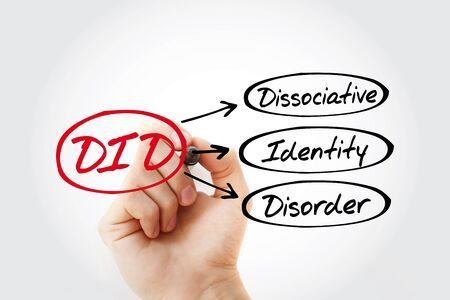
Dissociative identity disorder
Perhaps you've already heard of DID: Dissociative Identity Disorder. We're hearing more and more about it in the media, and we can even find it in certain films (e.g. Split). As a result, both true and false information about this pathology is circulating. Let's take a look at TDI together!

Parental Burn out
We've all heard of Professional Burn Out. But have you ever heard of parental/family burn out? Maybe it is still taboo, but yes, despite all the love that parents can bring to their child, a parent can experience parental burnout. Let's take a closer look at this subject and without taboos this time!
Self-determination
What if completing a task did not depend solely on you? What if your personality was governed by fundamental psychological needs and that meeting these needs could lead you to personal fulfillment? To be self-determined is to be able to respond to a sense of freedom, interest, appreciation and acceptance at the same time. Being self-determined is therefore fundamental to our well-being.