
High Intellectual Potential
HIP, Gifted or Zebra: all of these terms overlap under the same principle. HPI is a term that we have been hearing a lot about lately, whether on television through news or series (e.g. HPI with Audrey Fleurot), or even on social networks. Let's take a look at High Potentials.
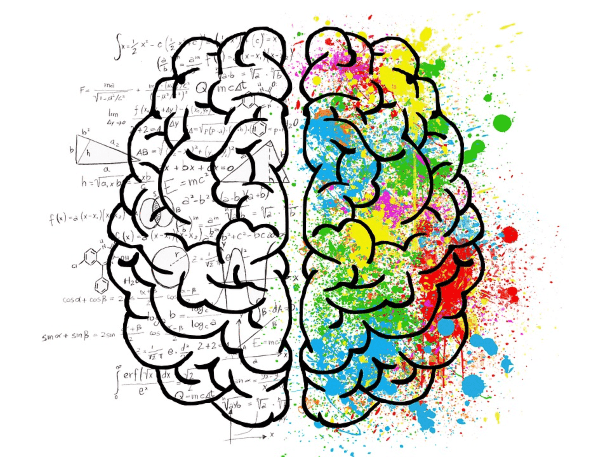
Key takeaways
- HP covers two profiles: HIP (High Intellectual Potential) and HEP (High Emotional Potential).
- HIP requires an IQ above 130, the top 2.3% of the population.
- Common specificities: boredom at school, strong memorization, hypersensitivity, curiosity and perfectionism.
- No single career fits HP people; roles requiring ongoing intellectual or emotional engagement work best.
- HP can sometimes be linked to ADHD or Asperger's Syndrome, though not systematically.
WHAT IS AN HP PERSON ?
A High Potential person is considered to have neuro-atypical functioning. This functioning is characterised by a different neurological development from the rest of the population. Thus, people with High Potential are not superior to the rest of the population, but they are able to make links between the different elements that surround them more quickly and memorise them more easily.
First of all, as a general rule there are two types of High Potential:
HIP: High Intellectual Potential
HEP: High Emotional Potential
Being HIP
Being HEP
HEP is High Emotional Potential: This characteristic corresponds to a superior emotional intelligence. HEP people do not necessarily have the same cognitive skills as HIP people, but they do have significant emotional skills. They will show strong sensitivity, empathy, and understanding of other people's emotions and their own. Often HEP people will also have good interpersonal skills by listening to others. Thus one of the main characteristics of HEP people is the fact that they are aware of their emotions and manage them.
It is important not to confuse HEP with hypersensitivity. Indeed, a hypersensitive person will also be very sensitive to what surrounds him or her in the environment, whether it be noise, light, sensations, etc., whereas an HEP person will only be concerned with emotions and the whole sphere that surrounds them. Like ADHD in HIP, HEP people can be hypersensitive and hypersensitive people can be HEP, but this is not always the case!
WHAT ARE THE DIFFERENCES BETWEEN HIP – HEP – GIFTED – ZEBRA ?
With all these terms, it's easy to get lost and not understand anything. So let's go over it all again. Moreover, depending on the site, the limits are quite blurred.
In the scientific community the term used is "High Potential", in common language some use the terms "giftedness" or "zebra" for example. But all these terms refer to the same characteristics.
WHAT ARE THE SYMPTOMS OF HIP? HOW DO I KNOW IF I HAVE HP ?
In HP we will not talk about "symptoms". Indeed, the term "symptom" refers to a pathology, a disease. But being HP is not a disease but a characteristic of the person. Thus we will rather use the term "specificities" which seems to us more adapted.
To find out if you are HP there are different tests that can be carried out with the help of professionals (psychologists, psychiatrists).
There are several signs that you may be gifted:
- People with HP are bored at school and may even drop out and fail at school. Maybe you yourself had the impression at school that the teacher was always repeating the same thing, that the lessons were too slow…
- For HPI, the IQ is higher than average: around 130. Different professionals can assess the IQ via different scales such as the WISC (for children) or the WAIS (for adults).
- Good memorization of lessons: Indeed, high potential people are able to memorize very easily the information on the subjects that interest them.
- Emotional hypersensitivity.
- Very curious, there is a need to know the "why" of things, to absorb knowledge regularly.
- It can be difficult to form relationships with others: these people may find themselves in a certain social isolation. People with HEP, on the other hand, are very good at developing social relationships but have great difficulty maintaining them over the long term.
- A high potential person is often a perfectionist who may therefore regularly think of himself as "rubbish", because what he does is never good enough!
- People with HIP and HEP often feel out of step with others, which can cause great suffering.
Of course, as explained above, there are tests that can detect a High Potential. If you think that you yourself belong to this population, do not hesitate to go and see a trained professional!
WHAT STUDIES AND CAREERS FOR HIP ?
If you are an HP yourself, you may feel that you have a lot of difficulty entering the professional world and you are therefore wondering about the jobs that could suit you.
I have some bad news… There is no such thing as a typical job for HP people. The main thing is that you find a career path that corresponds to your expectations, your desires, your interests and your needs. Often you will not find the right career path from the start. Perhaps you will need to experiment first before you find what suits you best.
Often the jobs that are suitable for HP people are those that involve a lot of thinking throughout the day. In order to maintain a job in the long term, it must be able to respond to the intellectual/emotional curiosity of HP people, require analysis…
Even if there is no typical job, it is important not to be in a repetitive job where there is nothing to learn. Being in this type of job can lead to boredom and bore out (mental and physical exhaustion due to boredom and lack of job satisfaction).
In the context of HP, people are also susceptible to burn-out (emotional and mental exhaustion, due to a prolonged and important investment). Indeed, in constant need of learning and multi-tasking, they can also quickly find themselves under water from the many tasks required. In addition, the line manager can also take advantage of this, by giving the employee even more tasks.
Despite the disconnect that HP people may feel, they have many strengths that they can apply in the professional world:
- the IT professions
- occupations involving human contact
- The sales staff
- art and creation
- ...
As said before, being High Potential is not a disease or a pathology! You think, understand and see things differently. However, if this is a great suffering for you, do not hesitate to go and see a professional who will help you understand.
The AI revolution !
Try our artificial intelligence for free and discover how it can support you in your daily life.

Frequently asked questions about giftedness and virtual reality
What is a gifted person?
A gifted person has neurodivergent functioning, with neurological development that differs from that of the general population. This does not mean they are superior to others, but they tend to make connections between surrounding elements more quickly and remember them more easily.
What is the difference between intellectual giftedness and emotional giftedness?
Intellectual giftedness refers to advanced cognitive abilities, such as memory, logic and visuospatial skills. Emotional giftedness refers to higher emotional intelligence, often associated with strong sensitivity and empathy. The two profiles are not mutually exclusive.
How can I tell if I am gifted?
Several signs may suggest giftedness, including boredom at school, easily memorising lessons, strong curiosity, perfectionism or difficulty forming lasting relationships. Only trained professionals, such as psychologists or psychiatrists, can confirm it through appropriate assessments such as the WISC or WAIS.
Is giftedness linked to ADHD or autism?
Gifted people often have branching or highly associative thought patterns, which can sometimes lead to concentration difficulties resembling ADHD. Autism spectrum disorder, including what was formerly referred to as Asperger syndrome, may also sometimes coexist with giftedness, although one does not necessarily imply the other.
What careers are suitable for gifted people?
There is no single type of career suited to gifted people. Roles that involve sustained thinking and satisfy their intellectual or emotional curiosity may be particularly suitable, for example in IT, sales, people-focused professions or artistic fields.
Are gifted people at greater risk of burnout?
Yes, a constant need for learning and multitasking can contribute to emotional and mental exhaustion. Conversely, repetitive work with little opportunity to learn may lead to boreout caused by a lack of stimulation.
How does the AI assistant Camille work?
The AI assistant Camille supports patients throughout exposure sessions and allows them to share their concerns without fear of being judged. Virtual characters also reproduce realistic social behaviours, enabling patients to practise situations such as a job interview or a social gathering.
Can I feel nauseous when using a virtual reality headset?
Yes, this can happen. This phenomenon, known as cybersickness, affects part of the population but is reversible. It is recommended to begin with static environments, such as relaxation scenarios, before gradually introducing movement.
Author
C2Care
Related articles

Improve concentration
Being able to concentrate is not something you are born with, you have to learn to develop it. And yet, it is key to our development in our personal and professional lives, and will help you achieve your goals. Therefore, it will bring you personal satisfaction and pride of accomplishment. Nevertheless, it is not easy to cut off all the surrounding or internal distractors to focus only on our goal. Here are some tips on how to improve your concentration.

Workaholism: the addiction to work
Workaholism or "boulomanie" in French refers to addiction to work. Unlike many other addictions, its symptoms such as presenteeism (being at work even when you shouldn't be) or over-investment in work are often valued in companies, which makes it more insidious and difficult to treat than most addictive disorders. However, as with all addictive behaviors, it exposes those affected to very significant health risks (hyperstress, burnout, depression).

Understanding Attention Deficit Disorder (ADHD)
It is a disorder that we hear more and more about, with the impression, at times, that it is thrown around. It remains one of the most common neurodevelopmental disorders, which the constant improvement of diagnoses allows to highlight. However, it is still not well known in its functioning and presentation. Let's take a look at ADHD and what this acronym means.
Emotional intelligence
Have you ever taken your stress or anger out on someone who had nothing to do with it? Knowing how to accept and properly manage your emotions is a sign of emotional intelligence, essential to success.

Autism Spectrum Disorder
Autistic Disorder, Asperger's Syndrome, Heller's Syndrome, Pervasive Developmental Disorder Unspecified: since the DSM-V, all these diagnoses have been grouped under the name ASD (Autism Spectrum Disorder). Is it an illness? What are its different forms? How can it be detected? Here is an overview of this still poorly understood disorder, which raises many questions and false beliefs.

The impostor syndrome
Do you have a feeling of fooling the world around you whether it be from a personal or professional point of view? Do you find it difficult to accept compliments? Perhaps you are subject to impostor syndrome! Although not considered as pathological, the impostor syndrome arouses much curiosity in psychology. Indeed, it affects a large majority of people who may have this experience at least once in their lives.