
What is a phobia ?
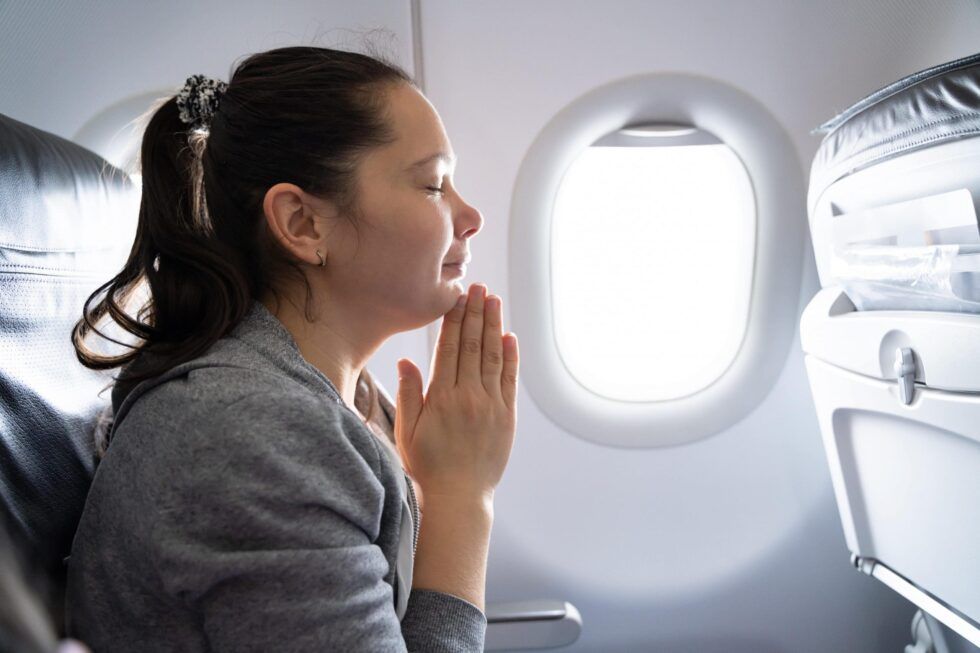
Phobos is the embodiment of fear, he followed his father on the battlefield. The panic fear that he triggered at the mere sight of him translates what a person feels when confronted with the object of his fear. There are many phobias and some are better known than others, among them, agoraphobia and claustrophobia. On the other hand, aviophobia is less so, even though it affects many people who also dream of discovering fine sandy beaches.
Key takeaways
- A phobia can prevent you from acting on your wishes and affect those around you through the anxiety it conveys.
- Aviophobia often combines with agoraphobia and claustrophobia.
- Virtual reality, paired with cognitive behavioural therapy, lets the patient face an airport or a plane in a gradual, supervised way.
- Sessions, carried out with a professional present, help the patient analyse their reactions to the feared situation.
- The goal is to recondition the cognitive pattern so that travelling becomes a source of pleasure again.
Virtual Reality as a Tool to Treat Aviophobia
Phobos is the embodiment of fear, he followed his father on the battlefield. The panic fear that he triggered at the mere sight of him translates what a person feels when confronted with the object of his fear. There are many phobias and some are better known than others, among them, agoraphobia and claustrophobia. On the other hand, aviophobia is less so, even though it affects many people who also dream of discovering fine sandy beaches.
The particularity of the phobia is that it is often responsible for an "impediment" to living because it forces the person who suffers from it not to do what he or she would like, not to accede to his or her desires. It can also be "transmitted" by the anxiety that it gives off in the patient's entourage. Thus, aviophobia triggers symptoms that the individual cannot control: fear of dying, feeling of temporary madness, feeling of suffocation, etc. However, these irrational symptoms have a logic for the victim. If the plane becomes the object of morbid anxiety, a flying coffin, it is enough to no longer live this risk so that death is not. This logic linked to aviophobia is very often combined with the two other phobias mentioned above, thus becoming a hell for anyone suffering from it.
Virtual reality can help overcome fear of flying. In the department of Professor Christophe Lançon at the APHM, Dr. Eric Malbos and the company C2Care in Marseille, have created a virtual reality system that allows patients to confront their phobias, real handicaps to well-being, and to finally have the prospect of overcoming them. When a professional tries to help a patient to overcome his phobia(s) and in particular aviophobia, it is difficult for him to accompany his patient to the airport in order to make him do some exercises, as it is the case for agoraphobia or claustrophobia.
Within the framework of the Behavioral and Cognitive Therapies (CBT), the virtual reality allows the patient in suffering to walk in an airport, to confront gradually and without it being too distressing still, with what paralyzes him. These sessions made in the permanent presence of a professional allow the patient to dialogue, to analyze what happens in him when he is in a situation, without being stuck in a place that terrorizes him. CBT, analysis, and the use of the virtual reality program allow for the complete accompaniment of the patient who finally sees himself in control of his fears, in an analysis of his psyche allowing him to understand why these psychic "fantasies" and these morbid mental images occur, and what are the deep reasons for them.
To be afraid is a necessary condition to preserve oneself in front of a danger. But that the supposed danger becomes the necessary condition of the individual is not in the order of things. Vacations must remain a pleasant moment, a source of pleasure, they must not be anxiety-provoking. Reconditioning the cognitive schema is possible. The help brought by professionals and new technologies must constitute the possibility of a new freedom for all those who suffer. If a revolution must take place, it must be the one that would finally scare Phobos, making it finally, definitively, leave the tarmac of airports and disappear the fear of flying.
Are you a healthcare professional? Discover our solutions to treat your patients' phobia
Are you an individual? Discover our services to treat your phobia
The AI revolution !
Try our artificial intelligence for free and discover how it can support you in your daily life.

Frequently asked questions about phobias and virtual reality
What is a phobia exactly?
A phobia is an irrational fear that impedes daily life, forcing the person to avoid situations linked to their desires. Symptoms include fear of dying or suffocation, even though the danger is not real. It can also affect the patient's entourage through anxiety.
How can virtual reality help treat aviophobia?
Virtual reality lets the patient walk through an airport and gradually confront what paralyzes them, without physically traveling there. This is done within Cognitive Behavioral Therapy, always with a professional present, avoiding the logistical difficulty of accompanying a patient to a real airport.
What happens during a virtual reality exposure session?
The patient confronts anxiety-inducing situations gradually, without the exposure being too distressing. A professional remains present throughout, allowing the patient to dialogue and analyze what happens to them in the situation, rather than being stuck facing their fear alone.
Why use virtual reality instead of real-life exposure?
Virtual reality allows gradual and controlled exposure in a secure environment, with adjustable intensity of stimuli. It also provides realistic, reproducible environments, which is difficult to guarantee with real-life exposure such as taking a patient to an actual airport.
Can virtual reality make me feel sick during a session?
This is called cybersickness, a well-known and reversible phenomenon affecting part of the population. Starting with static environments, then introducing slight head movements before slow movements, helps the body adapt to the sensation of movement.
Is aviophobia often combined with other phobias?
Yes, aviophobia is very often combined with agoraphobia and claustrophobia. This combination of irrational logics can become particularly difficult for the person suffering from it.
Who developed this virtual reality approach for phobias?
The system was created within the department of Professor Christophe Lançon at the APHM, by Dr. Eric Malbos together with C2Care in Marseille. It allows patients to confront phobias that represent real obstacles to well-being.
Author
Rodolphe Oppenheimer
Related articles

Jacobson Progressive Muscle Relaxation
This relaxation method has been around for a long time and has been scientifically validated many times. You can use it with your patients with all anxiety disorders, with all phobias, especially agoraphobia, generalized anxiety disorder (chronically stressed people who need relaxation). But there's nothing to stop you from using them in all mental pathologies.

Barlow's etiological model
Barlow's etiological model is presented in the second group therapy session. This model explains the causes of phobias, anxiety, OCD… According to this model, there may be a biological hereditary vulnerability, that is, a sensitivity to anxiety that is passed on by the parents. This sensitivity has advantages: it allows us to be sensitive to the environment and the people around us. This can be an advantage in human care (nurses, care assistants, psychologists), with animals (veterinarians) but also in the arts. Artists are often anxious people but also sensitive to the environment, and this sensitivity is very useful in the creative world.

Parental Burn out
We've all heard of Professional Burn Out. But have you ever heard of parental/family burn out? Maybe it is still taboo, but yes, despite all the love that parents can bring to their child, a parent can experience parental burnout. Let's take a closer look at this subject and without taboos this time!

Gaslighting
Many people suffer from the manipulation of those around them, most often without knowing it. If manipulation takes many forms, gaslighting has recently come to light. But what is it exactly?

Cognitive therapy: Self-observation
Cognitive therapy is used to help patients transform their way of thinking, to stop interpreting the situation in a dysfunctional way. For example, when the patient sees a dog, he or she thinks directly that the dog will bite him or her. The goal of these sessions is to change the way of thinking.
Gray's neurobiological model
Psychoeducation is done during the first group therapy session and consists of explaining the patterns of anxiety for patients who are phobic, have OCD, or have generalized anxiety disorders. The models help explain the causes and mechanisms of anxiety, the goal is to get patients to understand what is going on in their brains. Ignorance leads to fear. In group therapy, it is important to establish a dialogue with your patients and to set up an exchange, giving patients the opportunity to participate as often as possible.