
Jacobson Progressive Muscle Relaxation
This relaxation method has been around for a long time and has been scientifically validated many times. You can use it with your patients with all anxiety disorders, with all phobias, especially agoraphobia, generalized anxiety disorder (chronically stressed people who need relaxation). But there's nothing to stop you from using them in all mental pathologies.

Key takeaways
- Applies to anxiety disorders, phobias, agoraphobia, generalized anxiety disorder and addictions.
- Progressive muscle relaxation alternates 80% muscle contraction with gentle relaxation.
- Practiced twice a week, following a fixed muscle order from fist to toes.
- A calm voice, comfortable temperature and soft music help set the session.
- Regular training reduces soreness and improves patients' awareness of tension.
WHITH WICH PATIENTS SHOULD IT BE APPLED ?
This relaxation method has been around for a long time and has been scientifically validated many times. You can use it with your patients with all anxiety disorders, with all phobias, especially agoraphobia, generalized anxiety disorder (chronically stressed people who need relaxation). But there's nothing to stop you from using them in all mental pathologies. For example, it can be useful for patients who are addicted, who are smokers or alcoholics, because it gives them a possibility to do an action instead of smoking. So you can even teach it for addictions.
WICH RELAXATION METHOD FOR WICH PATIENT ?
There are three methods of relaxation : vagal, Schultz's autogenic training and Jacobson's progressive muscle relaxation. But which one to choose? Sometimes your patients will ask you which one to choose. In this case, it is best to ask them how they feel. If the main problem for one is that he feels tense, that his shoulders hurt, that his neck is stiff, that his legs hurt, then the Jacobson method is the most appropriate. If, on the other hand, another person tells you that he or she feels hot sensations when anxious, strange sensations of uneasiness, then Schultz' autogenic training is the most appropriate method. As for vagal relaxation, it is very quick to teach and apply and should therefore be automatic.
STARTING A JACOBSON RELAXATION SESSION
In a relaxation session, ask your patient to sit or lie down, to take off their purse, their jacket: to put themselves at ease. There is nothing to stop you from using background music if you wish. Dr. Malbos advises in particular to use music called "Space Music", a kind of electronic music which allows to have a very calm musical background and thus favourable for relaxation or meditation. The temperature of the room is also important. It should be pleasant, so don't hesitate to turn on a fan or the heater. In addition, when you speak, you should keep in mind to speak slowly and with a low, calm and warm voice, this encourages the relaxation process.
JACOBSON, THE METHOD
Let's start the Jacobson method. Start by telling your patient to clench his or her right fist at 80%, so quite hard. Ask him to concentrate on the sensation of pressure, the sensation of burning, the sensation of tension in the fist. It is very important, only the fist should be contracted. The forearm, biceps, shoulder, and all the rest of the body should be completely relaxed. At first, your patient will have difficulty contracting only the requested muscle components in isolation, but this is normal. Practice will make this exercise easier to perform.
The second phase of this method is the relaxation phase. Tell your patient to very gently, very slowly, relax his right hand. He/she should concentrate on the pain disappearing and the pressure decreasing. He has to realize that this tension is disappearing. His palm opens then, always very gently. His fingers will spread until a state of total relaxation.
These two phases are a summary of the whole idea behind the Jacobson relaxation method. This method consists in doing a phase of contraction at 80%, strong and slightly painful, followed by a phase of relaxation. That's why it's called "Jacobson's progressive muscle relaxation", because it allows patients to have a better knowledge of their state of contraction of their muscles. Learning this method will allow them to detect when their muscles are too tense and above all to be able to relax them.
Everything else will consist of doing exactly the same thing for each muscle group. A muscular order however is to be followed and is advised by Doctor Malbos :
- Fist
- Biceps
- Forehead (orbicularis, frown)
- Jaw muscles (masseter muscles, clench the teeth)
- Lips (pout)
- Neck (sternocleidomastoid muscles, ask your patient to place their hand on their forehead while the forehead pushes against this hand)
- Trapezius muscles (shoulder shrug)
- Diaphragm and accessory breathing muscles (take a deep breath and hold it)
- Abdominal muscles
- Gluteal muscles
- Quadriceps muscles (moving the leg or not)
- Calves (dorsiflexor muscles, lift the front of the foot)
- Toes (dorsiflexor muscles, lift the toes)
You can explain the following method to your patient: one day, one side, and the next day, the other side. Non-athletic patients who often have a low awareness of their bodies may sometimes experience mild soreness as if they had just completed a workout session. At the beginning of the relaxation exercise, it is important to specify that they should only contract the muscles at 80%. After the session, reassure them that soreness is possible in the following days and is completely normal. Training will reduce this soreness over time.
Speaking of training, how often should the Jacobson progressive muscle relaxation method be practiced? According to Dr. Malbos, twice a week.
The Jacobson relaxation method should be practiced with your patients so they become aware of the difference between the states of contraction and relaxation, allowing them to relax their bodies at any time.
The AI revolution !
Try our artificial intelligence for free and discover how it can support you in your daily life.

Frequently asked questions
Which patients is the Jacobson method suitable for?
This method is suitable for patients with anxiety disorders, phobias, particularly agoraphobia, and generalized anxiety disorder. It can also benefit people experiencing chronic stress and may be taught in addiction treatment as an alternative to behaviours such as smoking.
How should I choose between vagal relaxation, Schultz autogenic training and the Jacobson method?
The choice depends on the patient’s symptoms and sensations. If muscle tension is predominant, particularly in the shoulders, neck or legs, the Jacobson method is generally the most suitable. If the patient reports sensations of warmth or diffuse discomfort, Schultz autogenic training may be preferable. Vagal relaxation, which is quick to teach, can also be offered systematically.
How should a Jacobson relaxation session begin?
Have the patient sit or lie down comfortably, without a jacket or bag. Calm background music and a comfortable room temperature can support relaxation. The practitioner should speak slowly, using a low and reassuring tone of voice throughout the process.
In what order should muscle groups be worked during the Jacobson method?
The recommended sequence progresses from the fist to the toes: fist, biceps, forehead, jaw, lips, neck, trapezius muscles, diaphragm, abdominal muscles, glutes, quadriceps, calves and finally the toes. Each muscle is contracted to around 80% of maximum effort and then gradually relaxed.
Can patients experience muscle soreness after a session?
Yes, particularly patients who are not very physically active or have limited body awareness. This sensation, similar to that experienced after physical exercise, is normal and usually decreases with practice. Patients should be reassured about this after the session.
How often should the Jacobson method be practised?
Dr Malbos recommends practising twice a week. Regular practice helps patients better perceive the difference between muscle contraction and relaxation.
Can I feel nauseous when using a virtual reality headset?
This phenomenon, known as cybersickness, is reversible and well documented by researchers. It is recommended to begin with static environments, such as relaxation scenarios, before gradually introducing head movements and then slow movement through the environment.
Who should I contact if I have a problem with the software or headset?
C2Care technical support is available via live chat from your control panel. If the equipment is faulty, a return label will be provided and a replacement will be arranged within 48 hours.
Author
C2Care
Related articles

Schultz relaxation
Today we will discuss the Schultz method of relaxation. Schultz's autogenic training is one of three relaxation methods highly recommended by Dr. Malbos and for your patients who are anxious, addicted or who have an eating disorder. This relaxation method will ultimately be applicable to most of your patients, but will be particularly effective on your patients who are chronically stressed, in other words, who have a generalized anxiety disorder, but also on those who have a panic disorder or who have agoraphobia. For the small historical point; this method of relaxation was written by Doctor Schultz, psychiatrist of the German Göring Institute. He applied this method of relaxation with veterans of the first world war.

Sophrology
Reducing anxiety by being in complete control of one's body and thoughts is the very principle of sophrology. This therapeutic technique is based on various methods of relaxation, breathing, and imagery that lead to a rapid and long term appeasement. Sophrology has also proven itself when used in conjunction with virtual reality.

Self-affirmation: communication technique
Today, we are going to discuss an essential element of cognitive-behavioral therapy applied and enhanced by virtual reality: assertiveness. Which of your patients will be concerned by this type of technique? It is mainly patients who suffer from social phobias. So often, those who have difficulty speaking in public, those who are afraid to express themselves, those who are afraid to say "no" or those who do not dare to assert their point of view.

Response prevention – OCD
Response prevention is a cognitive-behavioral therapy method used for obsessive-compulsive disorder. This module takes place after the five psychotherapy sessions preceding exposure to virtual reality, and is intended for patients suffering from OCD.

Hygienic and dietary rules
In the context of anxiety (phobias, OCD, GAD), today we will discuss hygienic and dietary guidelines. These guidelines aim to provide advice on lifestyle habits and complement the therapeutic elements you will teach your patient.
What is a phobia ?
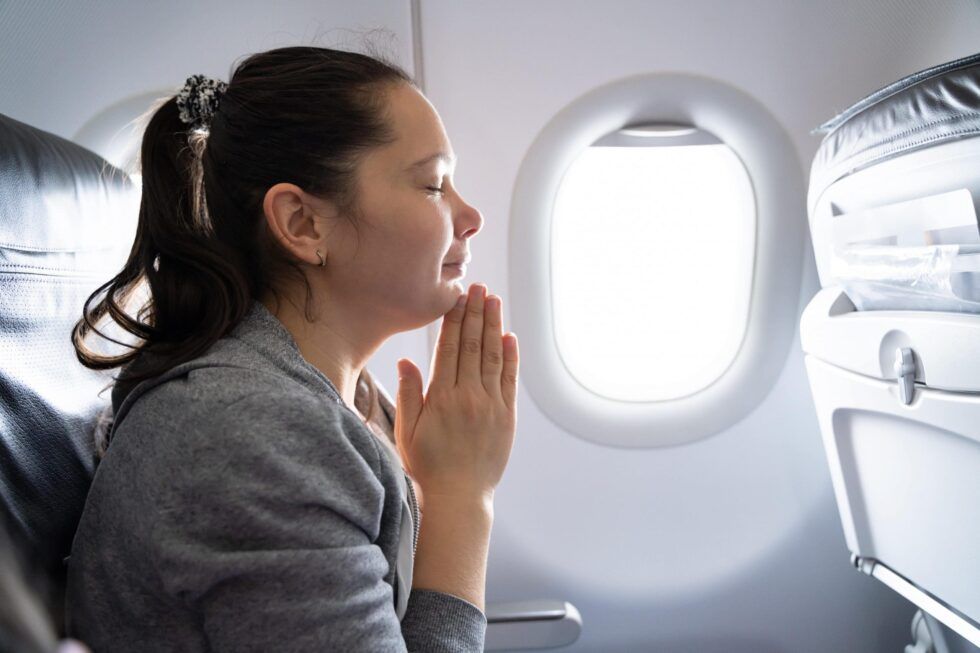
Phobos is the embodiment of fear, he followed his father on the battlefield. The panic fear that he triggered at the mere sight of him translates what a person feels when confronted with the object of his fear. There are many phobias and some are better known than others, among them, agoraphobia and claustrophobia. On the other hand, aviophobia is less so, even though it affects many people who also dream of discovering fine sandy beaches.