
Gender identity : better understanding for better support
Issues of gender identity and inclusivity have been at the forefront of the media landscape in recent years. From a health point of view, transgender people often suffer from a great deal of therapeutic wandering due to poor education on transidentity and lack of information from professionals. A short introduction to understanding gender identity and how to better care for trans people.
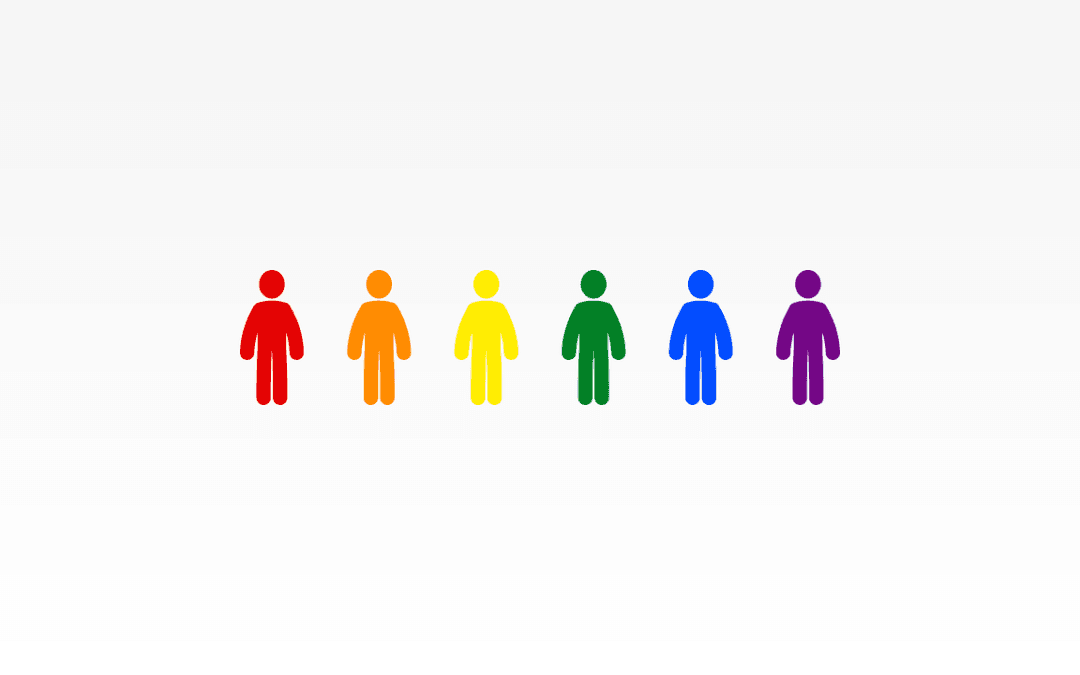
Key takeaways
- Le genre est un concept social et psychologique, distinct du sexe biologique.
- L'identité de genre repose sur quatre facteurs : identité, expression, rapport au corps et rapport aux rôles de genre.
- Une personne transgenre présente une divergence entre son identité de genre et le genre assigné à la naissance.
- La dysphorie de genre est une source de souffrance majeure, parfois liée au risque suicidaire.
- Utiliser le bon prénom et les bons pronoms, avec écoute et bienveillance, aide à soutenir un patient transgenre.
WHAT IS GENDER ?
Gender encompasses the social processes and relationships that serve to categorize humans. This categorization process is part of cognitive functions that allow our brain to conserve resources by simplifying the understanding of our environment. Throughout history and across cultures, an individual's gender has often been defined based on their sex.
However, sex and gender are two separate and very different concepts.
Sex is a biological concept. It ranges between two modes (male and female) and is constructed from many physiological factors: chromosomes, genes, hormone production, sexual organs, and secondary sexual characteristics, primarily. Therefore, there are many variations in the biological expression of sex.
Gender is a social and psychological concept that evolves within a broad spectrum. It mainly consists of four factors:
- Gender identity, which is a person's self-identification with one or more genders.
- Gender expression, which is how an individual modifies their presentation to align with their gender. This includes clothing, hairstyle, makeup, jewelry, name, and pronouns, etc.
- Body relationship, as the body one has may not correspond to the body associated with one's gender identity, causing significant distress.
- Relationships with gender roles, which are strongly influenced by culture and often play a role in the male-female binary.
WHAT IS TRANSGENDER IDENTITY ?
An individual's gender is often assigned at birth based on their sex, but it is a part of identity that evolves significantly throughout life.
Some of these evolutions are socially expected. A young boy's gender expression will not be the same as during his adolescence, which will again be different from his gender expression in adulthood.
If an individual's gender identity and gender expression follow the gender assigned at birth (male or female), they are referred to as cisgender. Cisgender people are comfortable with this identity, and their evolution follows what is socially expected and accepted. However, for some people, there is a divergence between their gender identity and the gender assigned at birth. These individuals are referred to as transgender. The most well-known and represented form of transgender identity is binary transidentity: people assigned male at birth who transition to a female identity, and people assigned female at birth who transition to a male identity. However, there is a broader spectrum of gender identities between and beyond these two poles.
IS GENDER BINARY ?
As we have seen, the concept of gender is constructed from many factors, and thus, all these variations make gender a spectral concept. It is very difficult to represent this gender spectrum, but here is a simplified version:
In this representation, shades of red are feminine, and shades of blue are masculine. Shades of pink and purple are therefore at the intersection of these two genders, in the realm of androgyny. Thus, even within this relatively binary aspect, we can observe an initial spectrum.
In this representation, however, there are colors that belong neither to the blue family nor to the red family. This pertains to non-binarity. Non-binary trans people do not identify with traditional genders and express their gender identity differently from the stereotypical expectations of men and women. This expression may be closer to traditional genders, as existing fashion is largely based on them, for example, but these identities remain outside this binary.
The last term represented in this image is "Agender" at the center, on the white. In this view of gender, the intensity of the color represents the intensity of identification with a gender. The more saturated the color, the stronger the identification. The paler the color, the weaker the identification. Some people do not identify with any gender or identify very weakly. The expression of a gender is of little importance to them, and how they are perceived is of little significance.
This diagram helps to understand in a visual way that gender is a matter of nuances, varying between individuals, most often in a gradient and rarely in a single color throughout life.
HOW TO HELP TRANSGENDER PEOPLE ?
Thanks to a better understanding of transgender identity in recent years, it is no longer considered a mental disorder in major disease classification and diagnostic manuals. However, transgender identity can be a source of great suffering, particularly gender dysphoria. This is intense distress that occurs when gender expression does not match gender identity. Dysphoria can be triggered by body appearance, clothing style, the use of incorrect pronouns or name, and anything that reminds of the assigned gender at birth that does not correspond to the real gender.
The best way to alleviate dysphoria is, of course, transition. It can be medical, involving surgery, hormones, and vocal reeducation, but also social, involving clothing, using the chosen name, and appropriate pronouns. It is important to note that transition does not have to be medical and that sexual reassignment surgery is not necessary or desired by all transgender people. Dysphoria is one of the most significant factors in the high rates of suicide and suicide attempts among transgender people. It is therefore important to assess suicidal ideation in patients with severe gender dysphoria. In addition to supporting your transgender patients through their transition processes, offering them moments of gender affirmation helps alleviate dysphoria.
Using the correct name and pronouns (do not hesitate to ask if necessary) as well as offering techniques for managing emotions and distress, as transitions are often long processes. More generally, kindness, listening, and acceptance are key in caring for a transgender patient. Their identity is not to be questioned, nor their suffering. Their life is often filled with various degrees of violence, and the therapist should be a safe place for them to progress and alleviate their distress.
The AI revolution !
Try our artificial intelligence for free and discover how it can support you in your daily life.

Frequently Asked Questions about Gender Identity and Virtual Reality
What is the difference between sex and gender?
Sex is a biological concept based on chromosomes, hormones, and physiological traits, with several possible variations. Gender is a social and psychological concept that evolves along a broad spectrum, encompassing gender identity, gender expression, body relationship, and relationships with gender roles.
What is gender dysphoria?
Gender dysphoria is the intense distress that occurs when a person's gender expression does not match their gender identity. It can be triggered by body appearance, clothing style, incorrect pronouns or name, or anything recalling the gender assigned at birth.
Is being transgender considered a mental disorder?
No. Thanks to a better understanding of transgender identity in recent years, it is no longer classified as a mental disorder in major disease classification and diagnostic manuals. However, transgender identity can still be a source of significant suffering, particularly gender dysphoria.
Does transitioning always require surgery?
No. Transition can be medical, involving surgery, hormones, or vocal reeducation, but it can also be purely social, through clothing, chosen name, and appropriate pronouns. Sexual reassignment surgery is not necessary or desired by all transgender people, and social transition alone can be enough for many.
What does non-binary mean?
Non-binary trans people do not identify with traditional male or female genders. They express their gender identity differently from stereotypical expectations of men and women, sometimes closer to traditional genders, sometimes entirely outside this binary framework altogether.
How can I best support a transgender patient?
Use the correct name and pronouns, ask if unsure, and offer techniques for managing emotions and distress during often long transition processes. Kindness, listening, and acceptance are essential: never question a patient's identity or suffering, since their life is often marked by various degrees of violence.
Why is assessing suicidal risk important for transgender patients?
Gender dysphoria is one of the most significant factors behind high suicide and suicide attempt rates among transgender people. Practitioners should therefore assess suicidal ideation in patients presenting severe gender dysphoria, while supporting their transition process and offering moments of gender affirmation.
What role does artificial intelligence play in therapy sessions?
C2Care uses artificial intelligence through Camille, an assistant IA that supports patients as a trusted companion without judgment, and through virtual characters that faithfully replicate real-life social behaviors in contexts such as a party, a date, or a job interview.
Author
C2Care
Related articles

The Theory of Constructed Emotion
Many models attempt to explain the functioning and development of emotions. This recent model offers a new perspective on emotional skills and the cultural variations of them.

4 September : World Sexual Health Day
The WHO defines sexual health as "a state of physical, mental and social well-being in relation to sexuality (…)", underlining the importance of the psychological aspect of sexuality. While sexual health is often seen through the prism of sexually transmitted infections (STIs) and somatic dysfunctions, it is important to remember that sexuality is above all mental. It involves desire, libido, arousal, attraction and so on. So let's use this World Sexual Health Day to take a look at the mental and social aspects of sexual health.
Dissociative identity disorder
Perhaps you've already heard of DID: Dissociative Identity Disorder. We're hearing more and more about it in the media, and we can even find it in certain films (e.g. Split). As a result, both true and false information about this pathology is circulating. Let's take a look at TDI together!
National Hypersensitivity Day
This day is an opportunity to revalue hypersensitivity. Launched by Saverio Tomasella, it allows to better inform the leaders on the characteristics and modalities of hypersensitivity. They represent a quarter of the population and are estimated to number nearly 10 million in France. It is therefore necessary to take into account the specific problems of hypersensitive people and their place in society.

Self-stigma
Belonging to a minority group can cause a lot of suffering. Most often this suffering comes from outside, from majority groups or from other minority groups. But the stress and suffering related to this status can also come from within. Low self-esteem, dysfunctional beliefs, repetition of toxic patterns, self-stigmatisation adds further suffering to the minority experience. It is interesting to understand how this mechanism works in order to better support people who suffer from it.
Neurotransmitters : our neural language
Have you ever heard expressions like "having a memory like an elephant"? Or "having the brain of a sparrow"? Because yes, not so long ago it was thought that intelligence and brain size were related. Today, it is no longer a secret; intelligence has nothing to do with the diameter of our forehead or the volume of our brain. We know that, despite its average weight of 1400 grams, the human brain is the most advanced and dynamic in the living world.