
Eating Disorders
Helping Practitioners Address Eating Disorders Through Virtual Reality
Eating is essential to daily life, but for some patients the relationship with food becomes disrupted, leading to anorexia, bulimia or binge eating disorder. C2Care supports practitioners in applying cognitive behavioral therapy through virtual reality exposure, a treatment shown to reduce eating crises in over 70% of cases.

- +350
- facilities
- equipped
- +700
- practitioners
- trained
- +10
- years
- of expertise
- +25
- countries
- of deployment
About C2Care and Eating Disorders
What Are Eating Disorders?
Eating disorders, also called eating behavior disorders, involve eating patterns that are not appropriate for a person's environment and lead to somatic and psychological difficulties. The three major types are anorexia nervosa, bulimia, and binge eating disorder, each defined by distinct patterns of restriction, binge eating or compensatory behavior. Other recognized disorders include pica, rumination disorder, and avoidant/restrictive food intake disorder (ARFID).
How it works
A Complete Solution for Eating Disorder Care
C2Care combines immersive technology and therapeutic guidance to help practitioners address the eating behaviors described above.

Headset & hardware
The virtual reality headset immerses patients in everyday food-related situations, such as meal preparation, to work on eating behaviors under controlled conditions.

Therapeutic platform
The C2Care platform gives practitioners access to environments designed to support cognitive behavioral therapy for anorexia, bulimia and binge eating disorder.

Personalization
Each exposure can be adjusted to the patient's specific eating disorder and level of distress, allowing a graduated approach to food-related anxiety and body image concerns.

Support
The assistant IA Camille accompanies patients throughout their sessions, offering a non-judgmental presence during sensitive exposures related to food and body image.
How it works
How to Use C2Care for Eating Disorder Treatment
- 1
Choose the environment
The practitioner selects a relevant environment, such as a kitchen, a supermarket or a fitting room, depending on the patient's specific difficulties.
- 2
Equip the patient
The patient puts on the virtual reality headset and is introduced to the chosen scenario in a secure, controlled setting.
- 3
Adjust the exposure
The practitioner adjusts the intensity of the exposure gradually, working on food-related anxiety, body image or binge eating triggers.
- 4
Support
The assistant IA Camille supports the patient throughout the session, while the practitioner guides the therapeutic work on thoughts and emotions linked to food.

Environments
Virtual Environments for Eating Disorder Exposure
Practitioners can choose from several everyday environments to work on food-related anxiety and body image.

Kitchen
The kitchen environment allows patients to confront meal preparation, a situation that can trigger anxiety in anorexia, bulimia or binge eating disorder.
More details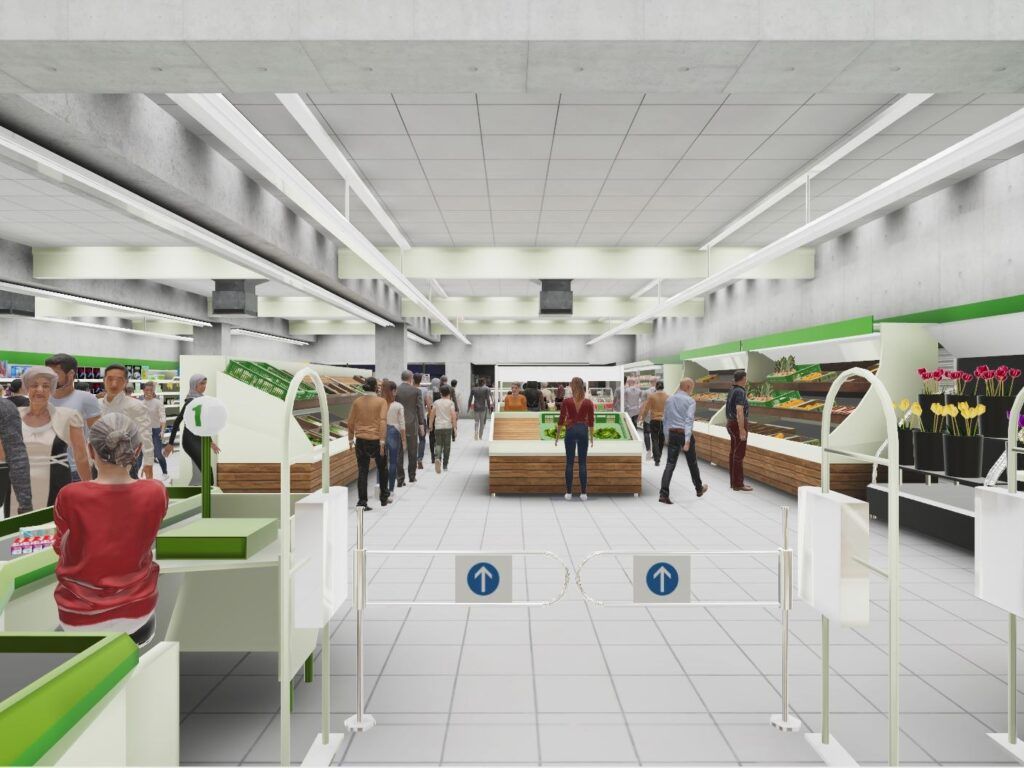
Supermarket
The supermarket environment exposes patients to food shopping, helping practitioners work on avoidance or compulsive food-related behaviors.
More details Fitting Room
The fitting room environment addresses body image concerns linked to clothing and appearance, relevant to body dysmorphia and eating disorders.
More details Virtual Body
The virtual body environment lets patients confront distorted body perceptions directly, supporting therapeutic work on body dysmorphia.
More detailsTherapeutic applications
Related Disorders Addressed With Virtual Reality
Eating disorders take several forms, each of which can be addressed through C2Care's virtual reality approach.
Anorexia Nervosa
Anorexia nervosa involves food restriction and an intense pursuit of weight loss, often with body dysmorphia. C2Care's immersive environments allow practitioners to work gradually on body image and food-related anxiety within a cognitive behavioral therapy framework.
Bulimia
Bulimia is characterized by urges to eat large quantities of food, followed by compensatory behaviors such as vomiting. Virtual reality exposure helps patients confront the emotional states, such as stress, that trigger these episodes, in a personalized and controlled setting.
Binge Eating Disorder
Binge eating disorder shares the same urges as bulimia but without compensatory behaviors, leading to weight gain. C2Care supports practitioners in addressing the triggers of binge eating episodes through graduated exposure.
Pica
Pica involves the persistent consumption of non-food items and can cause digestive obstructions or poisoning. Practitioners can use C2Care's personalized approach to support the behavioral work recommended alongside medical follow-up.
Rumination Disorder
Rumination disorder is defined by the regurgitation of food, which is then re-chewed, re-swallowed or spat out. C2Care's platform helps practitioners integrate this behavioral work into a broader cognitive behavioral therapy plan.
Avoidant/Restrictive Food Intake Disorder (ARFID)
ARFID involves restriction or avoidance of food intake, often linked to sensory hypersensitivity, and can lead to significant weight loss. Virtual reality exposure allows a gradual approach to food-related situations that trigger avoidance.
Other Specified or Unspecified Feeding or Eating Disorders
These disorders cause significant distress without meeting the specific criteria of the disorders above. C2Care's personalized environments can be adapted to the individual behaviors and difficulties observed in each patient.
Body Dysmorphia
Body dysmorphia, frequently associated with anorexia nervosa, involves an obsession with certain body parts and a distorted body perception. C2Care's virtual body environment allows practitioners to work directly on this distorted self-image.
Mood Disorders
Eating disorders are frequently associated with mood disorders. Virtual reality is also used to address these conditions, giving practitioners a comprehensive approach to patients' anxious and depressive symptoms alongside their eating behavior.

Success stories
What Practitioners Say
Practitioners share their experience using C2Care to support patients with eating disorders.
Success stories
Why Choose C2Care?
+350
facilities
equipped
+700
practitioners
trained
+10
years
of expertise
+25
countries
of deployment
FAQ
Frequently Asked Questions About Eating Disorders and Virtual Reality
Practitioners and patients often ask the following questions about using virtual reality to treat eating disorders.
Why use virtual reality in mental health treatment?
Virtual reality lets patients face anxiety-inducing situations in a secure, controlled setting, gradually adjusting stimulus intensity to build habituation. It reproduces realistic scenarios consistently, increases patient engagement, and can be personalized to each patient's needs.
What pathologies can be treated with virtual reality?
Virtual reality is used across a wide range of conditions, including anxiety disorders such as school phobia, autism, addictions, eating disorders, neuropsychological disorders, psychotic disorders, and mood disorders. Studies report strong feasibility and significant results, particularly in adults.
Can I feel nauseous while using the headset?
Yes, this reaction is known as cybersickness and affects a portion of the population. It is reversible: starting with static environments, then adding slight head movements before slow movements, helps the body adapt to the sensation of motion.
What are the benefits for therapists using virtual reality?
Virtual reality helps therapists stand out from traditional treatment approaches and is backed by extensive research supporting its credibility. It increases patient engagement through its interactive nature and saves time by giving direct access to exposure environments without external logistics.
Which patients can benefit from virtual reality exposure therapy?
Virtual reality exposure therapy is effective across a wide age range, from adults to adolescents and elderly patients, with documented benefits including cognitive stimulation and anxiety reduction. It is not recommended for people with epilepsy or pregnant individuals.
Who should I contact in case of software issues?
Contact C2Care's technical support team via live chat from your control panel. They will help diagnose the problem and find a solution, providing a return label and replacing defective equipment within 48 hours if necessary.
What pathologies can be treated with virtual reality?
Virtual reality is used to treat anxiety disorders, including phobias, post-traumatic stress disorder and obsessive-compulsive disorders, as well as addictions, mood disorders, eating disorders, and neuropsychological or psychotic disorders.
Can I feel nauseous while using the headset?
It can happen; this is called cybersickness, a phenomenon well known to scientists that affects part of the population. It is reversible, and starting with static environments before introducing slight, then slow, head movements helps the body adapt.
Who can use virtual reality for treatment?
Virtual reality is effective across a wide range of populations, from adults to adolescents and elderly patients, with real therapeutic benefits documented in the literature. It is not recommended, however, for people with epilepsy or pregnant individuals.
What are the benefits for therapists using virtual reality?
- Professional Differentiation: integrating virtual reality allows therapists to stand out from traditional treatment options.
- Scientific Validation: virtual reality exposure therapy is backed by extensive research.
- Improved Patient Engagement: the interactive nature of virtual reality fosters greater involvement in therapy.
- Time-Saving: virtual reality provides direct access to various exposure environments without external logistics.
Who should I contact in case of software issues?
Our technical support team can be reached via live chat from the control panel. If an issue occurs with the headset, the team works with you to diagnose the problem and, if necessary, provides a return label and replaces the defective equipment within 48 hours.
Which patients can benefit from virtual reality exposure therapy?
Virtual reality exposure therapy shows excellent feasibility and significant results in adults, particularly for anxiety disorders, autism, addictions, eating disorders, neuropsychological disorders, psychotic disorders and mood disorders. Adolescents show similarly positive results, with virtual reality increasing their engagement in therapy, while elderly patients benefit from its use in cognitive stimulation, behavioral disorders and anxiety. It is not recommended for people with epilepsy or pregnant individuals.
How is artificial intelligence used within C2Care?
C2Care uses artificial intelligence through an assistant IA named Camille and through virtual characters within the scenes. Camille provides support and acts as a trusted companion with whom patients can share their concerns without fear of judgment, while the virtual characters faithfully replicate real-life social behaviors in everyday contexts such as a party, a date, a job interview, or a spontaneous conversation.