
C2Care at the service of intensive care patients
C2Care collaborated with the Hôpital Nord de Marseille (AP-HM) as well as with Maryse Pour la Vie to prepare patients for their stay in the ICU following lung transplantation surgery.
The very first patient to have contributed to this study was exposed before her operation. The results obtained are very positive.
Key takeaways
- C2Care partnered with Hôpital Nord de Marseille (AP-HM) and Maryse Pour la Vie to prepare a lung transplant patient for her ICU stay.
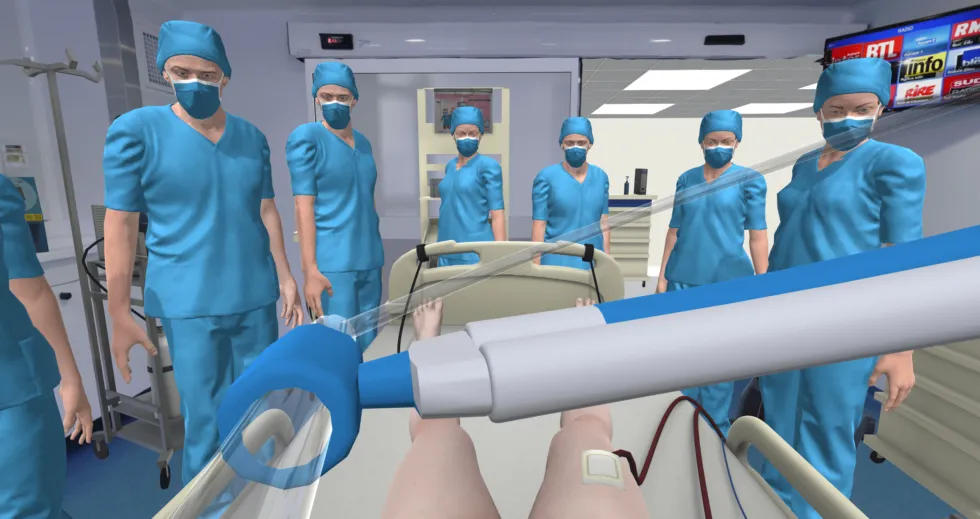
- Before surgery, the patient was exposed to the C2Care software with Dr. Maltese to discover caregivers and equipment in advance.
- The results were positive: the patient reported waking up "without surprise" after the operation.
- C2Care aims to extend this study to support more patients and institutions.
VIRTUAL REALITY IN THE RESUSCITATION SERVICE
C2Care collaborated with the Hôpital Nord de Marseille (AP-HM) as well as with Maryse Pour la Vie to prepare patients for their stay in the ICU following lung transplantation surgery.
The very first patient to have contributed to this study was exposed before her operation. The results obtained are very positive.
The stay in the intensive care unit is an ordeal that is too rarely experienced well by patients. The physical and psychological shock, but also the general world of the intensive care unit are often traumatic. This traumatic experience, if it is too deafening, will have a considerable impact on the length of the stay and on possible complications. That is why this study was set up, to reassure, accompany, relieve patients and nursing staff in intensive care.
Before her operation, the patient was exposed to the C2Care software with Dr. Maltese for a total immersion. Thanks to these exposures and the work of the psychologist, she was able to prepare for her stay in the intensive care unit, meet the caregivers and discover the machines that would accompany her in her recovery. The goal was to minimize the traumatic impact once the patient began her stay in the ICU.
"Once the operation was over, I woke up without surprise." These are his words. The results are promising and we are eager to take this project to the next level and develop this study to support new patients and institutions.
C2Care thanks Hôpital Nord and Maryse Pour la Vie as well as Dr. Coiffard and Dr. Maltese.
Think about it: organ, tissue, blood and bone marrow donations save lives every day.
Try our artificial intelligence for free and discover how it can support you in your daily life.
C2Care's virtual reality solutions support you step by step toward better well-being.

Frequently Asked Questions about Intensive Care Patients and Virtual Reality
How does virtual reality help patients prepare for an ICU stay?
Before her operation, the patient underwent virtual reality sessions with Dr. Maltese to explore the intensive care unit, meet caregivers and see the medical equipment she would encounter. This preparation aimed to reduce the traumatic impact of her ICU stay after lung transplantation surgery.
Can I feel nauseous while using the headset?
Yes, some patients experience cybersickness, a well-known and reversible phenomenon. Starting with static environments, such as relaxation scenes, and moving gradually toward slight head movements helps the body adapt to the sensation of movement while remaining physically still.
Are there any contraindications to virtual reality therapy?
Virtual reality therapy is not recommended for people with epilepsy or for pregnant individuals. Beyond these exceptions, the literature shows it can be used across a wide age range, including adults, adolescents and elderly patients, with therapeutic benefits observed for each group.
Which patients can benefit from virtual reality exposure therapy?
Virtual reality exposure therapy benefits a broad range of patients. Studies show effectiveness in adults treated for anxiety disorders, addictions or eating disorders, in adolescents with increased therapeutic engagement, and in elderly patients for cognitive stimulation and anxiety management.
What happens if I have a problem with my VR headset?
Contact C2Care's technical support team via live chat from your control panel. The team will help diagnose the issue and, if needed, send a return label and replace the defective equipment within 48 hours.
Why use virtual reality in the field of mental health?
Virtual reality allows gradual exposure to anxiety-inducing situations in a secure, reproducible environment, adapted to each patient's needs. It increases patient engagement and can be used for anxiety disorders, phobias, addictions, mood disorders and cognitive remediation.
Author
C2Care
Related articles

Improve concentration
Being able to concentrate is not something you are born with, you have to learn to develop it. And yet, it is key to our development in our personal and professional lives, and will help you achieve your goals. Therefore, it will bring you personal satisfaction and pride of accomplishment. Nevertheless, it is not easy to cut off all the surrounding or internal distractors to focus only on our goal. Here are some tips on how to improve your concentration.
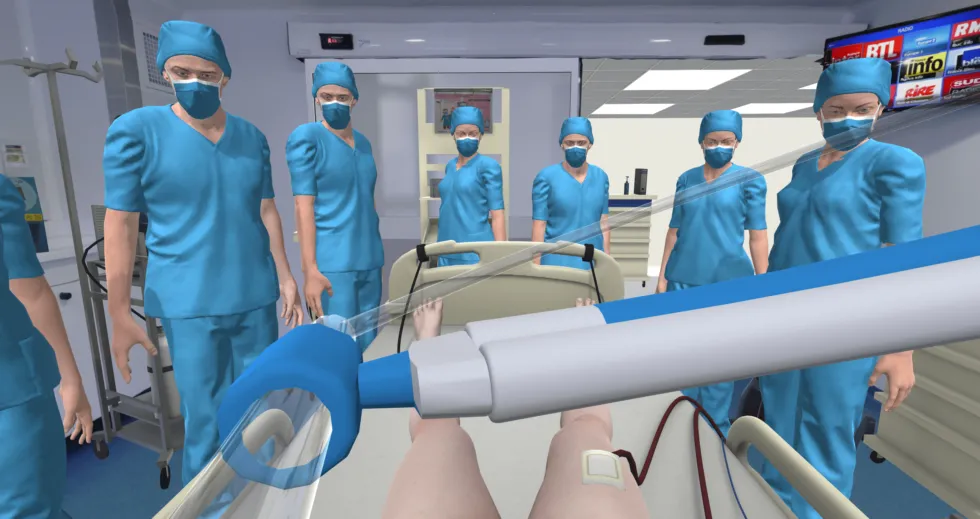
World premiere, Virtual Reality takes part in Pulmonary Transplantation procedure
For the first time in the world, a patient on the lung transplant list will be able to benefit from therapeutic virtual reality sessions to prevent post-operative psychological trauma, thanks to a groundbreaking partnership between C2Care and AP-HM (Public Assistance – Hospitals of Marseille).
Formavenir, C2CARE and AP-HP revolutionize caregiver training with virtual reality and are finalists for the Sante Expo 2020 Innovation Awards
The union of 3 experts to give birth to Soignants Ré.V: modules of formation by simulation of the serious game type using the immersive capacity of virtual reality to work on the soft skills of caregivers in the management of pain or aggressiveness of their patients.
Gray's neurobiological model
Psychoeducation is done during the first group therapy session and consists of explaining the patterns of anxiety for patients who are phobic, have OCD, or have generalized anxiety disorders. The models help explain the causes and mechanisms of anxiety, the goal is to get patients to understand what is going on in their brains. Ignorance leads to fear. In group therapy, it is important to establish a dialogue with your patients and to set up an exchange, giving patients the opportunity to participate as often as possible.
How is Covid-19 impacting on Mental Health ?
For several months now, people around the world have faced an unprecedented attack on their health, well-being and economy. This has created further obstacles for those already suffering from mental disorders ranging from anxiety to depression to substance abuse. It also creates mental problems in the population on a scale never seen before. The coronavirus is an unseen enemy that has been shown to affect the mental well-being of nearly half of the U.S. population. [1] Given that the pandemic and control methods are likely to continue, these statistics can only get worse, placing an enormous burden on mental health practitioners to remain innovative in supporting and treating their clients.

Working on self-confidence
We have all, at one time or another, doubted ourselves or our abilities to accomplish a task or overcome an obstacle. When this lack of self-confidence starts to become too difficult to overcome and it handicaps us, limits us, builds barriers to our projects or desires, it is fundamental to take responsibility for improving it. Having self-confidence will allow you to achieve great things, and your personal pride will only grow!