
Cognitive stimulation in virtual reality
C2Brain: Supporting Cognitive Rehabilitation Through Virtual Reality
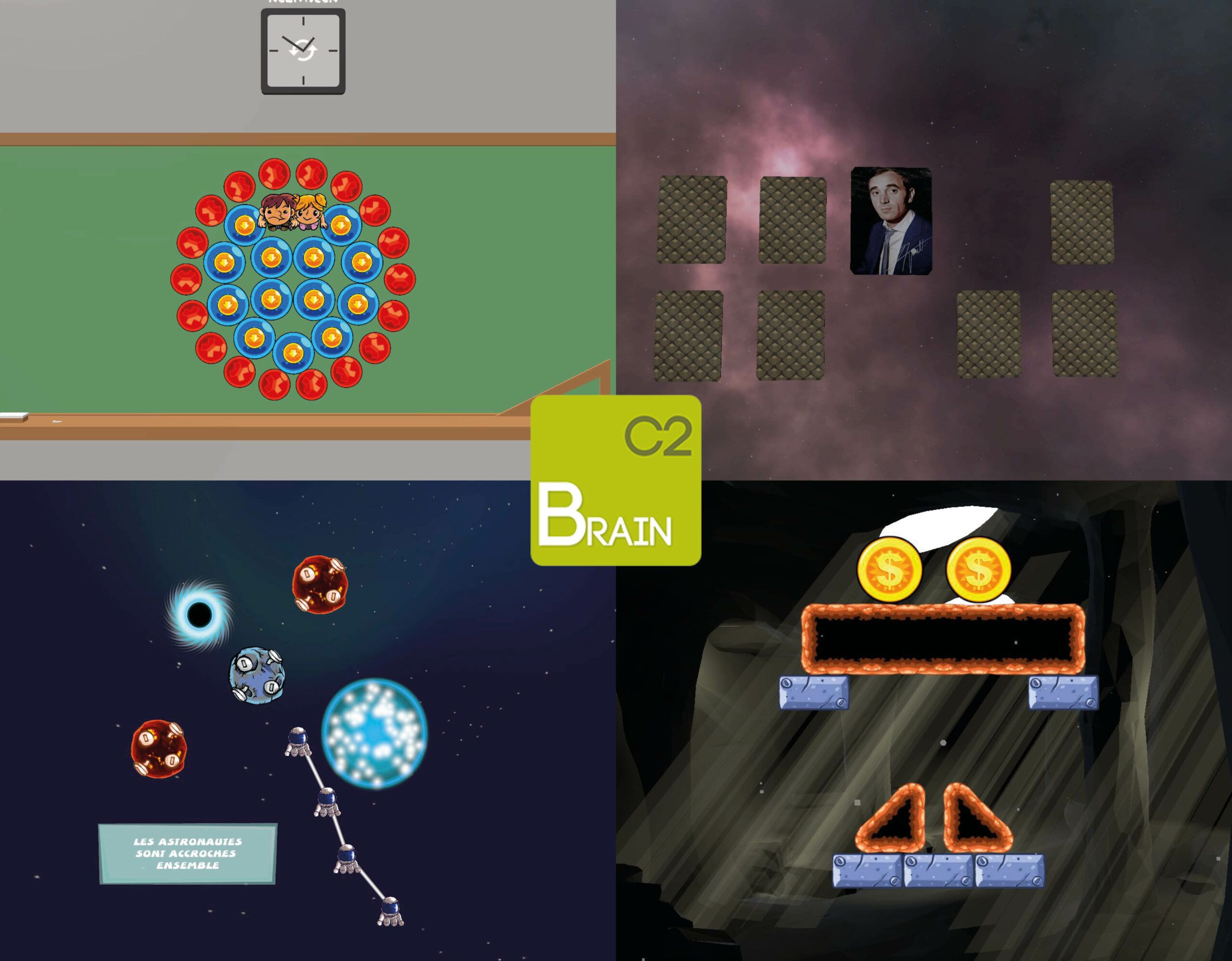
C2Brain offers easy, ludic exercises for cognitive stimulation, sensorial therapies and memory skills. The application accounts for sensorial and motor difficulties some patients experience. Its systematic results analysis supports work on cognitive decline and readaptative or functional issues.
- +350
- facilities
- equipped
- +700
- practitioners
- trained
- +10
- years
- of expertise
- +25
- countries
- of deployment
About C2Care and cognitive stimulation
What is cognitive stimulation in virtual reality?
Cognitive stimulation trains skills such as attention, memory and problem solving through targeted exercises. Combined with virtual reality, it relies on interactive, immersive environments that work on procedural memory and help patients process incoming information. Cognitive processes can be restored by reiterating exposures regularly (Klinger, 2006).
How it works
A complete cognitive training solution
C2Care combines dedicated software, an immersive platform and practitioner support to deliver C2Brain's cognitive stimulation exercises.
Headset & hardware
C2Brain runs on a virtual reality headset, giving patients access to ludic exercises designed around sensorial and motor considerations.

Therapeutic platform
The C2Brain platform hosts several cognitive training games, each with systematic results analysis to track work on cognitive decline and functional rehabilitation.

Personalization
Difficulty levels evolve according to the patient's success, from traditional tasks to harder exercises adapted to their engagement.

Support
Practitioners can try a scene incorporating artificial intelligence directly online, supporting patients throughout their cognitive training.
How it works
How does C2Brain work?
- 1
Choose the environment
Select the game that matches the skills to stimulate: memory, practical skills, spatial perception or anticipation.
- 2
Equip the patient
Equip the patient with the virtual reality headset to enter the chosen cognitive training exercise.
- 3
Adjust the exposure
Adjust the difficulty level as the patient progresses, from traditional tasks to harder exercises depending on their engagement.
- 4
Support
Follow the systematic results analysis to accompany the patient's cognitive rehabilitation over time.

Environments
C2Brain training exercises
Find the different exercises available depending on the skills you want to stimulate.

Memory skills
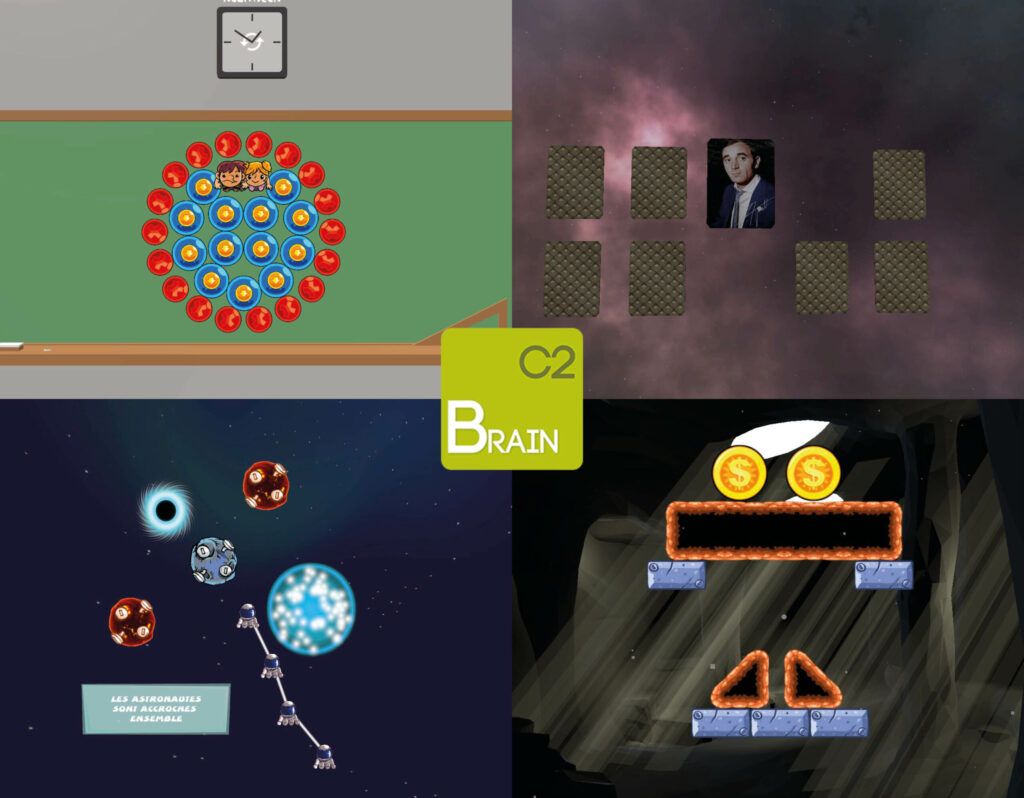
A memory card game works on cognitive and practical stimulation: patients must memorise cards and their location to find matching pairs. Difficulty increases with the number of cards.
Practical skills
In "Attracted", the goal is to guide each astronaut to a specific place using slow, precise gestures. The exercise combines practical and cognitive skills.
Spatial perception skills
In "Gold seeker", patients remove bricks to find a golden coin without making it fall, working on spatial perception, anticipation and attentional skills across 44 levels.
Anticipation skills
In "Save me", patients must prevent characters from falling, except one. The exercise works on anticipation and attentional skills, with levels that gradually get harder.
Therapeutic applications
Which conditions can benefit from C2Brain?
C2Brain supports cognitive rehabilitation for several conditions affecting memory, attention and executive functions.
Stroke
Stroke can affect attention, memory and executive functions. C2Brain's cognitive training games, with adjustable difficulty levels, support the readaptative and functional work needed after a stroke.
Traumatic brain injury
Traumatic brain injury often impairs attention, visual perception and problem solving. C2Brain's ludic exercises and systematic results analysis help practitioners work on these functions progressively.
 Learn more
 Multiple sclerosis
Multiple sclerosis can affect memory and executive functions over time. C2Brain offers cognitive stimulation exercises with evolving difficulty levels to accompany patients' rehabilitation.
Depression
Depression can be associated with reduced concentration and cognitive engagement. C2Brain's ludic, motivating exercises are designed to sustain attention and engagement during cognitive training.

Success stories
Success stories with C2Brain
Practitioners share how C2Brain supports cognitive stimulation in their practice.
Success stories
Why choose C2Care?
+350
facilities
equipped
+700
practitioners
trained
+10
years
of expertise
+25
countries
of deployment
FAQ
Frequently asked questions about C2Brain and cognitive stimulation
Find answers to the most common questions practitioners ask about C2Brain and cognitive training in virtual reality.
What is C2Brain used for?
C2Brain is a virtual reality application designed for cognitive training. It offers ludic exercises for cognitive stimulation, sensorial therapies and memory skills, adapted for patients with cognitive or motor issues.
What cognitive skills does C2Brain target?
C2Brain focuses on attention, memory, visual perception, anticipation, problem solving, decision taking and executive functions. Levels evolve depending on the patient's success, adapting the cognitive readaptation approach progressively.
How does virtual reality help with cognitive rehabilitation?
Virtual reality combined with cognitive rehabilitation improves the patient's skills to treat and use incoming data. Interactive and immersing virtual environments train procedural memory and allow cognitive processes to be restored through regular exposures.
What games are available in C2Brain?
C2Brain includes several games: a memory game with card pairs, "Attracted" for practical and cognitive skills, "Gold seeker" for spatial perception with 44 levels, and "Save me" for anticipation and attentional skills.
Is the difficulty level adjustable in C2Brain?
Yes. C2Brain allows different levels of difficulty, from traditional tests to harder tasks that take into account time, interest and the patient's engagement. Levels evolve progressively depending on success.
Who can benefit from C2Brain?
C2Brain was developed considering sensorial and motor issues that some patients can have. It supports work on cognitive fall and readaptative and functional issues through systematic results analysis.
How can I try C2Brain?
You can create a free C2Care account to get more information and try out a scene incorporating artificial intelligence directly online.
Does C2Brain include artificial intelligence?
Yes. Practitioners can try C2Care's artificial intelligence for free and discover how it can support their patients' daily cognitive training.